

Last updated: November 9, 2026
A liposuction compression garment applies even, supportive pressure over treated areas while they heal. Compression may help manage swelling, bruising, and discomfort, but the right fit and wear schedule depend on your procedure and your surgeon’s instructions.
What does a liposuction compression garment actually do?
A liposuction compression garment provides gentle, consistent pressure over the areas treated with surgical fat removal. The support may make swelling and everyday movement more comfortable during early healing, and its pressure may help limit postoperative bleeding. A garment does not hold muscles in place or guarantee a particular contour; it is one part of a broader recovery plan.
Why might your surgeon recommend compression after liposuction?
The American Society of Plastic Surgeons’ liposuction recovery guidance explains that a compression garment can help minimize swelling and support the body as it heals. Your surgeon may recommend one alongside instructions for incision care, activity, and follow-up.
At Skinsational, the first 1–2 weeks of liposuction recovery include wearing a compression garment. Dr. Luciano Sztulman tailors the wear schedule to the areas treated and how you heal.
Does compression prevent seromas or improve final liposuction results?
Compression may offer support and help with swelling or discomfort, but patients should not count on a garment to prevent a seroma, which is a collection of fluid beneath the skin. Evidence also does not establish that wearing a garment produces a better final liposuction contour.
What do the 2023 and 2024 evidence reviews actually show?
The evidence differs by operation and outcome. The findings below should not be treated as the results of a definitive liposuction-only garment trial.
| Source | Procedures reviewed | What the review found |
|---|---|---|
| The 2023 Plastic and Reconstructive Surgery Global Open practical review | Several aesthetic and related operations | The best-supported findings concerned less swelling and bruising after rhinoplasty and less pain after breast and abdominal procedures. The review found no demonstrated reduction in seroma rates. |
| The 2024 JPRAS Open systematic review | Abdominoplasty; 5 trials involving 130 patients | Evidence supporting abdominal binders was weak, and the tendency toward fewer seromas was not statistically significant. |
When can I stop wearing my compression garment after liposuction?
The MedlinePlus liposuction overview says patients will likely need a compression garment for several weeks. An American Society of Plastic Surgeons (ASPS) article on liposuction recovery describes wearing one through week four or as otherwise directed, while a surgeon featured in a separate ASPS liposuction recovery article recommends four to eight weeks for his patients. These are examples, not required stop dates: our first 1–2 weeks of garment wear mark early recovery, not the end of compression. Stop or reduce wear only when your surgeon instructs you to, based on your procedure and healing.
Should you wear it all day or take breaks?
An article on the American Society of Plastic Surgeons website describes one surgeon’s typical schedule: a firmer stage 1 garment worn around the clock for one to two weeks, followed by a less-firm stage 2 garment during weeks two to six that need not be worn all day. This is an example, not a universal schedule. Your postoperative instructions should specify when to wear and remove your garment, including for washing.
What should you do if you miss time in your garment?
Do not make the garment tighter or add extra hours to compensate for missed wear. Resume the prescribed schedule; if swelling has made the garment difficult to put on or changed its fit, contact your care team before continuing.
How should a liposuction compression garment fit?
A liposuction compression garment should feel secure and evenly snug without pinching, restricting movement, or causing persistent discomfort. The garment should cover the areas your surgeon identifies while lying smoothly against the skin. A tighter fit is not a faster route to healing; sizing and placement matter more than forceful pressure.
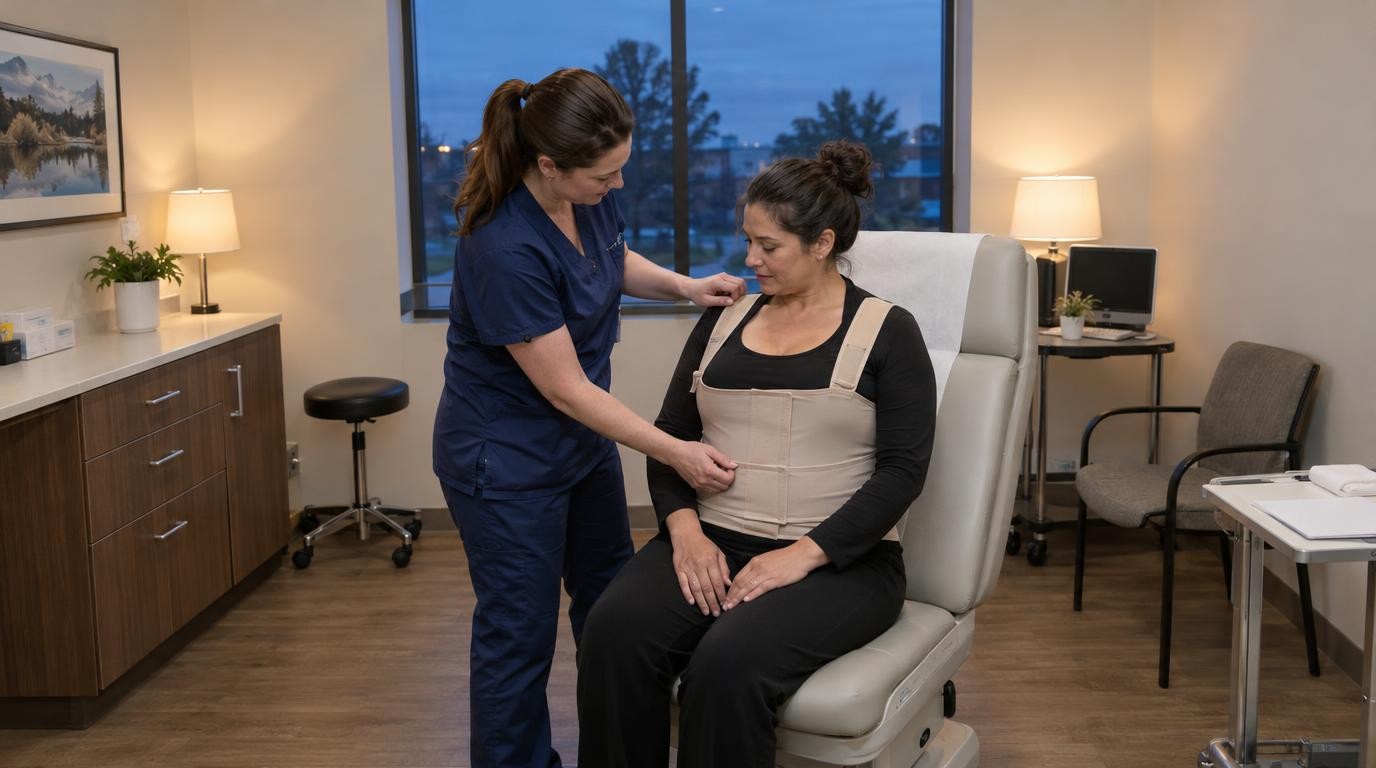
What signs suggest the garment is too tight or uneven?
Snugness is expected. Pain, numbness that begins or worsens under the garment, deep pressure marks, or difficulty moving normally are reasons to have the fit checked. The article on compression garments from the American Society of Plastic Surgeons website says a garment should allow movement and should never feel as though it is cutting off circulation.
How should you handle rolling, rubbing, or an uncomfortable seam?
A rolled edge or seam can concentrate pressure instead of distributing it evenly. Check that the garment is positioned as instructed, then ask your care team to verify its size and adjustment if rolling or rubbing continues. Do not add extra layers or tighten closures to flatten a crease without guidance, especially near healing skin.
Do the liposuction technique and treated area change your garment plan?
Yes. The treated area determines where a garment needs to provide coverage, while the procedure and your healing progress may affect fit and wear instructions. No assisted technique should be assumed to have a proven shorter compression schedule.
How do power-assisted liposuction, SmartLipo, and VASER Lipo differ?
At Skinsational, power-assisted liposuction uses vibrations to assist fat removal, SmartLipo uses laser energy, and VASER Lipo uses ultrasound. Those methods differ in how they assist the surgeon; garment decisions still depend on the areas treated and your recovery. Patients comparing methods can read more about laser-assisted and traditional liposuction.
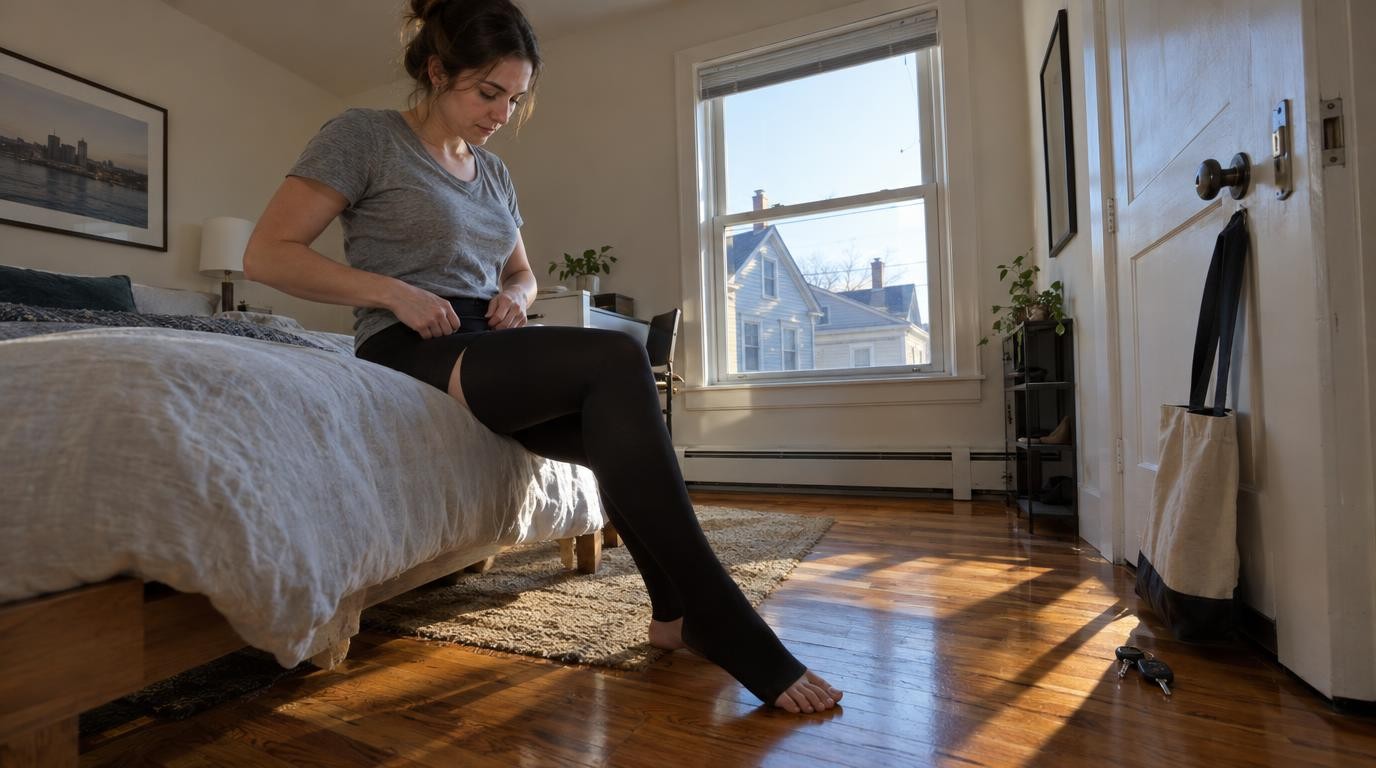
Coverage may differ for an abdomen or flank treatment, thigh liposuction, or arm liposuction. For more on an upper-arm procedure, see our arm liposuction recovery guide.
How long does inner thigh lipo take to heal?
After thigh liposuction alone, patients can often return to light activity within several days, although swelling and soreness may last several weeks, according to an article on thigh refinement from the American Society of Plastic Surgeons. For liposuction more generally, the Cleveland Clinic’s liposuction overview says swelling can take three to six months to resolve and complete healing can take up to six months; your inner-thigh recovery may differ. A thigh lift, which also addresses loose skin, generally involves a longer recovery.
What should you expect while wearing a garment during liposuction recovery?
When can you resume light activities and normal routines?
Skinsational’s general milestones describe a gradual return to activity:
- Weeks 1–2: Mild swelling, bruising, and soreness; garment use; and a return to light daily activities.
- Weeks 3–4: Less swelling, a more visible contour, and a return to most normal activities.
- Months 2–3: A smoother silhouette may become more apparent as healing continues.
Your instructions take priority over these milestones, particularly if several areas were treated or another procedure was performed at the same time. Resume exercise only when cleared to do so.
How to stay skinny after liposuction?
Maintain a stable weight through balanced eating, adequate hydration, and regular exercise once your surgeon clears you, as an American Society of Plastic Surgeons article on maintaining liposuction results recommends. Liposuction contours localized fat; it is not a weight-loss treatment. Remaining fat cells can still enlarge with weight gain, so wearing a garment cannot prevent weight-related changes to your results.
What risks and health factors should you discuss before liposuction and compression?
Temporary soreness, bruising, and swelling are common after liposuction. The Cleveland Clinic describes some liposuction complications as rare; possible complications include fluid collections, infection, contour irregularities, and blood clots. A compression garment does not eliminate those risks and can cause discomfort or skin irritation if it fits poorly. Your health history and the planned procedure both matter.
Who may not be a good candidate for liposuction?
Liposuction is intended for people close to their ideal weight who want to contour localized fat, not for substantial weight loss. Health factors that increase surgical risk, affect healing, or make compression difficult call for individual assessment rather than self-exclusion. Discuss your medical history, medications, goals, and any concerns about wearing a garment with your own licensed clinician before treatment.
Can you compress too much after a tummy tuck?
Yes, an abdominal binder can be too tight, and tummy-tuck instructions should not be substituted for liposuction instructions. According to the American Society of Plastic Surgeons’ guidance on postoperative compression, a garment should feel snug but should not cause pain or restrict breathing. If your binder is painful or feels restrictive, contact your surgical team to have its fit assessed; seek emergency care if you have trouble breathing. The 2024 JPRAS Open abdominoplasty review found limited evidence suggesting binders increased intra-abdominal pressure. That was an abdominoplasty finding, not a measured liposuction-specific effect. The 2023 practical review also identified possible compression-related skin defects and increased venous stasis, making fit and follow-up important.
A tummy tuck may address loose abdominal skin as well as fat, whereas liposuction targets fat deposits. Our liposuction-versus-tummy-tuck guide explains the distinction.
Which symptoms need a prompt call to your surgeon?
Contact your surgical team promptly for worsening pain, marked skin color changes or persistent irritation beneath the garment, fever, or new leg swelling. Seek emergency care for chest pain or trouble breathing. Do not assume that a garment is preventing a clot or that worsening symptoms are simply part of normal swelling.
Frequently Asked Questions
Do I need to buy a compression garment before liposuction?
Not necessarily. As an American Society of Plastic Surgeons guide to recovery notes, your surgeon may provide a compression garment. Ask our team whether you need to purchase one, what size and coverage your procedure requires, and whether to bring it on surgery day.
Do I need foam padding under my liposuction compression garment?
Not necessarily. Foam padding may be part of an individualized plan, but it is not a standard addition for everyone. One surgeon describes providing supplemental foam to patients undergoing athletic sculpting. Use foam only if it is included in your postoperative plan, and place it as directed rather than adding it yourself.
What kind of compression garment is used after chin or neck liposuction?
A garment that wraps around the head and under the chin may be used after neck liposuction, according to the American Society of Plastic Surgeons. It differs from the bodysuits or sleeves used for other treated areas.
Can I walk while wearing a compression garment after liposuction?
Yes. MedlinePlus advises walking as soon as possible after liposuction to help prevent blood clots in the legs, while avoiding more strenuous exercise for about a month. A compression garment should not prevent you from walking comfortably.
Can I wear a compression garment if I have drains after liposuction?
Yes. A surgeon may use both a compression garment and drainage tubes after liposuction. MedlinePlus explains that tubes may remove blood and fluid during the first few days after surgery. The garment should not obstruct the tubes; record the fluid in their reservoir if your postoperative instructions call for it.
Can an elastic bandage replace a compression garment after liposuction?
Sometimes. The American Society of Plastic Surgeons lists an elastic bandage, a support bra, or a compression garment as options to minimize swelling and support healing after liposuction. Ask your surgeon which is appropriate for your treated area; do not replace your prescribed garment on your own.
Are there liposuction compression garments I can use without removing them to go to the bathroom?
Yes. An article on the American Society of Plastic Surgeons website notes that some lower-body compression garments have openings for bathroom use. The garment still needs to cover your treated areas without disturbing incisions or dressings.
What should you ask about your personal compression plan?
A complete compression plan identifies the areas to cover, the daily wear schedule, when removal for washing is allowed, and how long to continue. It should also explain what to do if the garment rubs, rolls, becomes painful, or no longer fits.
Which garment, wear schedule, and follow-up instructions apply to you?
The garment should lie smoothly over the treated areas and allow movement without pain. Your postoperative plan should specify the follow-up visit at which its fit and wear schedule will be reassessed as swelling changes.
Skinsational Cosmetic Surgery Clinic is located in Providence, Rhode Island, and welcomes patients from Lincoln, Rhode Island. If you are considering liposuction or have questions about an individualized compression plan, contact Skinsational Cosmetic Surgery Clinic to arrange a consultation with Dr. Luciano Sztulman.
This information is general and is not medical advice. Talk to a licensed clinician about your own situation before making a treatment decision.

