
Last updated: November 11, 2026
A compression garment for tummy tuck recovery provides gentle, even support to the abdomen while swelling subsides. The right garment and wear schedule depend on your operation and recovery.
What is a compression garment for tummy tuck recovery?
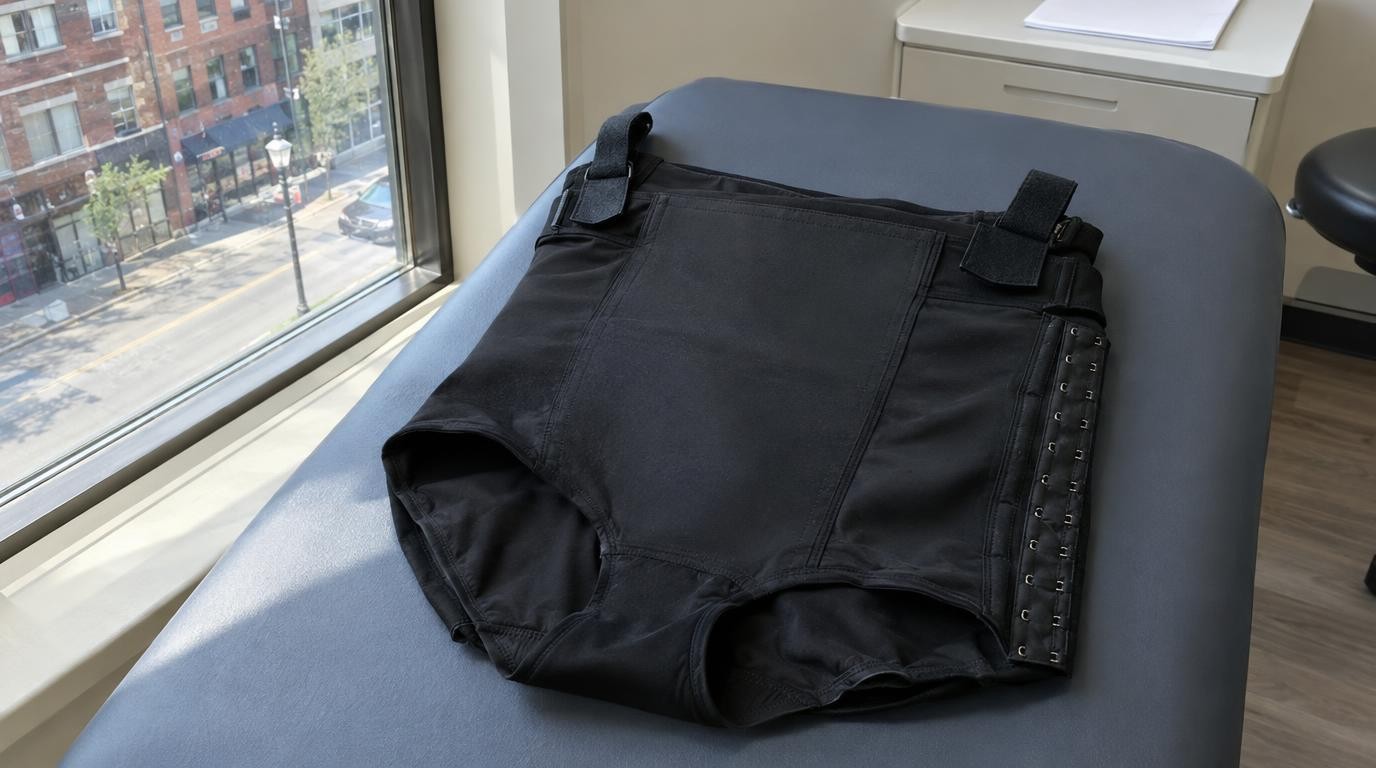
A compression garment for tummy tuck recovery is an abdominal binder or fitted postoperative garment that applies consistent pressure around the healing abdomen. Compression can help manage swelling and provide support, but the garment does not remove loose skin or repair separated abdominal muscles. Those changes come from the abdominoplasty procedure itself.
What is a compression garment?
An abdominal binder wraps around the midsection and has adjustable closures. A fitted garment is shaped more like clothing and provides coverage across the areas selected by the surgical team. The American Society of Plastic Surgeons’ tummy tuck recovery guidance explains that an elastic bandage or compression garment may be used to minimize swelling and support the abdomen as it heals.
At Skinsational, our tummy tuck and abdominoplasty service addresses excess skin and fat and, when appropriate, weakened or separated abdominal muscles. Compression supports recovery from that surgery; it cannot produce the surgical result. For more on what the operation changes, see our guide to abdominoplasty surgery.
What are the best compression garments for tummy tucks?
The best compression garment for a tummy tuck is the binder or fitted postoperative garment selected for your procedure and checked for proper fit. An adjustable binder offers flexible abdominal coverage, while a fitted garment may cover additional treated areas. Neither style is universally best, and ordinary shapewear should not replace a prescribed postoperative garment.

How is an abdominal binder different from a fitted garment?
A binder’s adjustable closures can accommodate changes in abdominal swelling and may make access to dressings easier. A fitted garment follows the body’s contours and may provide more continuous coverage when treatment extends beyond the central abdomen. Closure placement, incision contact, access for wound care, and comfort matter more than the garment’s appearance.
Can ordinary shapewear replace a postoperative compression garment?
Ordinary shapewear is not designed around a healing incision, dressings, or the coverage your operation requires. It may bunch or press unevenly where support needs to be consistent. Use the style specified by your surgical team rather than treating a tighter everyday garment as an upgrade.
How should a tummy tuck compression garment fit?
A tummy tuck compression garment should feel snug and supportive without painful constriction, incision rubbing, or restricted breathing. Pressure should be reasonably even across the covered area, with closures secured as instructed. A garment that rolls, digs in, or shifts out of place needs a fit check rather than progressively tighter fastening.
What are signs that your garment is too tight or too loose?
Painful pressure, deep rubbing at the incision, numbness, or trouble taking a comfortable breath can signal excessive tightness. Repeated rolling, sliding, or gaps may mean the garment is too loose or the wrong shape. An article on the American Society of Plastic Surgeons’ website says a garment should feel snug without being uncomfortable, restrictive, or tight enough to interfere with circulation.
How long should you wear a compression garment after a tummy tuck?
There is no universal stop date for compression after a tummy tuck. Our recovery timeline includes compression garments during the first 1–2 weeks but does not set a fixed stop date. An article on the American Society of Plastic Surgeons’ website describes wearing a garment for 4–6 weeks after a tummy tuck.
What did the 2026 trial find about one, three, and five months of compression?
The 2026 randomized trial, “Is Longer Better? Revisiting Compression Duration After Abdominoplasty with Diastasis Repair?” assigned 120 patients who had abdominoplasty with rectus diastasis repair to standardized class-II compression for 1, 3, or 5 months. At 6 months, abdominal muscle separation remained comparably stable: the 1-month schedule was non-inferior to the longer schedules.
Mean changes in inter-recti distance—the space between the abdominal muscles—at six months were:
| Compression schedule in the 2026 trial | Mean inter-recti distance change |
|---|---|
| 2026 trial: 1 month | +1.2 mm |
| 2026 trial: 3 months | +1.3 mm |
| 2026 trial: 5 months | +1.4 mm |
In that trial, longer compression did not improve abdominal wall stability, contour, or patient satisfaction. Shorter wear was associated with earlier return to activity, better early trunk strength performance, and greater comfort; aesthetic satisfaction was similarly high across groups by 12 months. The findings apply most directly to patients like those studied – people undergoing abdominoplasty with rectus diastasis repair while wearing the trial’s specified garment.
How should you transition off compression?
The trial’s authors concluded that a 1-month protocol followed by guided weaning offered a balance of support and comfort for their study group. Guided weaning means changing the schedule with the surgical team’s direction and reassessing how the abdomen is healing, not treating the trial result as an instruction to remove your garment after a calendar deadline.
Is it okay to sleep without a compression garment after a tummy tuck?
Usually not during the initial continuous-wear period. For compression after plastic surgery, an article on the American Society of Plastic Surgeons’ website describes day-and-night wear, except for bathing, for one to three weeks. It says nighttime wear may continue for several more weeks after the surgeon’s approval. Your tummy tuck instructions determine when you may sleep without the garment.
How do you put on, remove, and clean a compression garment?
- Check your postoperative instructions before removing the garment, particularly if you have dressings or drains.
- Open the closures gently and move the fabric away without tugging on the incision or attached dressings.
- When putting it back on, position the garment as demonstrated by the surgical team and fasten it for even support, without folds or edges pressing into the incision.
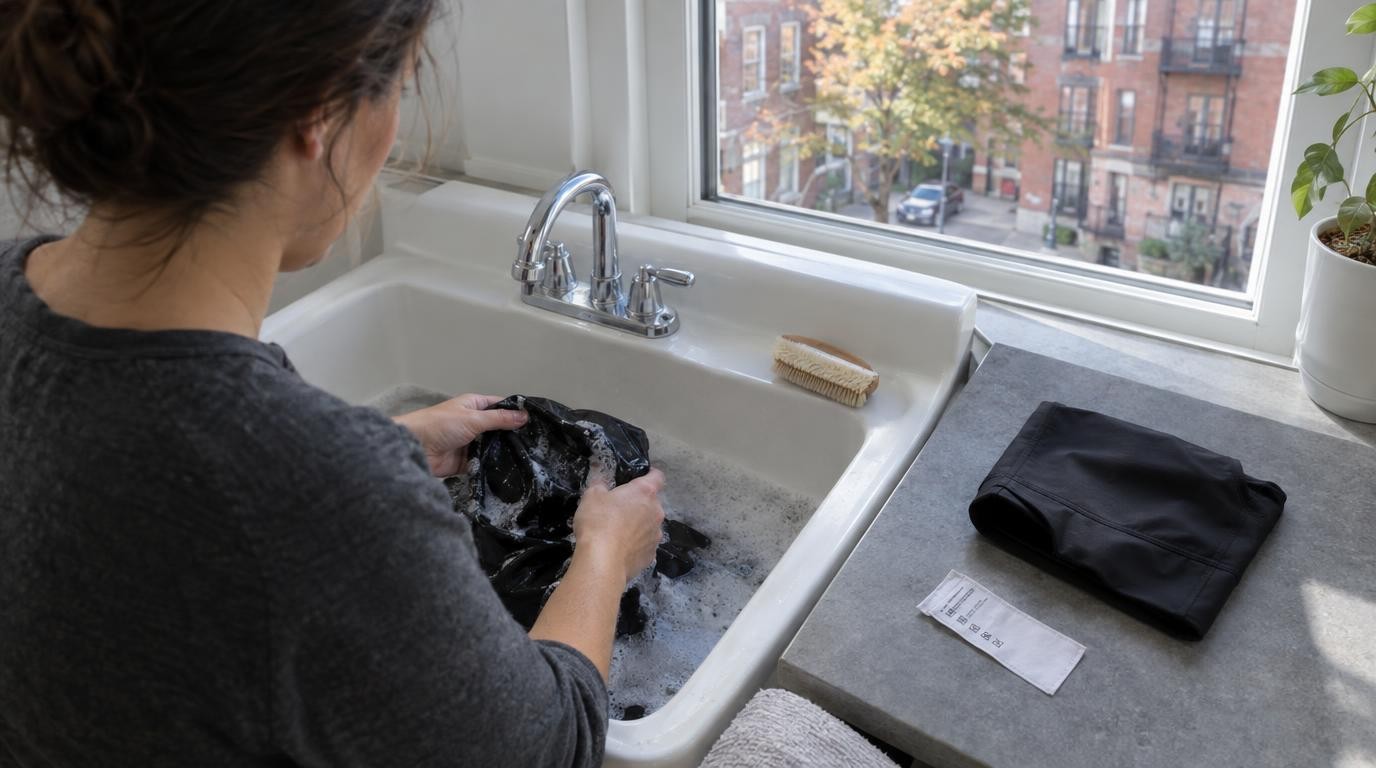
- Follow the garment label for washing and drying so the fabric retains its intended fit.
When can you take the garment off for bathing or washing?
Once bathing is permitted, you can remove the garment to bathe or shower and periodically to wash it, then put it back on according to your wear schedule. Follow your wound-care instructions for any dressings or drains; a clean spare garment may help while one is being washed.
Does garment choice change with a mini tummy tuck or added liposuction?
At Skinsational, Dr. Luciano Sztulman tailors full tummy tuck, mini tummy tuck, and tummy tuck with liposuction options to the patient’s anatomy and goals. A mini tummy tuck focuses on the lower abdomen, while added liposuction may extend treatment to the waist and flanks. Our surgical team chooses garment coverage and fit for the areas actually treated, so a lower-abdominal mini tuck and a tuck with waist or flank liposuction may call for different garments. Neither operation requires one universal style. Our guide to liposuction versus tummy tuck and combined options explains why compression cannot substitute for choosing the appropriate surgical approach.
What are the risks of compression, and who needs an adjusted plan?
Compression can irritate skin or cause pressure discomfort, particularly if the garment rubs a healing incision or fits too tightly. It should not restrict breathing or circulation. If your garment rubs an incision, interferes with dressings or drains, causes pain, or raises circulation concerns, contact our surgical team to assess its fit and your wear instructions. Do not keep tightening it or simply stop wearing it without checking with us; our team can adjust the fit or plan.
The 2026 randomized trial linked longer compression with delayed swelling resolution, reduced venous flow, and higher pressure inside the abdomen during the period from 1-3 months after surgery. Seroma and wound complication rates were low and comparable across its groups. Those findings do not mean compression is unsafe for every patient; they show why more months of wear should not automatically be assumed to be better.
When should you contact your surgical team about your garment?
Contact our surgical team promptly for worsening pain, numbness, skin-color changes, increasing incision irritation, fever, spreading redness around the incision, or pus. New one-sided leg swelling or calf pain needs urgent medical evaluation because it could signal a blood clot. Seek emergency care for chest pain or difficulty breathing rather than trying to solve those symptoms by adjusting the garment.
What should you ask about compression at a tummy tuck consultation?
A tummy tuck consultation should leave you with a specific garment plan: which style to wear, how it should fit, when to wear it, and how changes will be assessed. Questions about sleep, bathing, cleaning, and weaning are as important as choosing between a binder and a fitted garment.
- Will an adjustable abdominoplasty binder or a fitted garment better cover my incision and any additional treated areas?
- How will the team check sizing and placement as swelling changes?
- What is my planned daytime and nighttime wear schedule, and when will it be reassessed?
- When may I remove the garment for bathing or cleaning, and would a spare be useful?
- What signs mean the garment needs refitting or the weaning plan needs to change?
Frequently Asked Questions
When are tummy tuck drains removed, and should I keep wearing compression afterward?
Drains are typically removed based on how much fluid they collect, not when compression ends. The Aesthetic Society says removal usually occurs three to fourteen days after surgery. Compression may continue for several weeks, including after the drains come out.
Do I still need a compression garment after a drainless tummy tuck?
Yes, a drainless tummy tuck can still involve compression. An article on the American Society of Plastic Surgeons’ website says patients should expect to wear a garment for a few weeks to manage swelling. “Drainless” describes the surgical technique; it does not mean a garment is unnecessary.
Will I need a different compression garment as tummy tuck swelling goes down?
You might need a refit or a smaller garment if yours becomes too loose as swelling subsides. Some patients transition from a firmer first-stage garment to a less-firm second-stage garment as swelling decreases and daily activities resume.
Can a compression garment reduce bruising after a tummy tuck?
A compression garment may help reduce postoperative bruising, but it cannot prevent every bruise. Bruising can still occur when small blood vessels leak into the surrounding tissue after surgery.
Does an abdominal compression garment prevent blood clots after a tummy tuck?
Do not rely on an abdominal garment to prevent blood clots. Separate measures may include calf compression boots during surgery, adequate hydration and walking afterward, and, for some patients, a low-dose blood thinner.
Can I return to work while I am still wearing a tummy tuck compression garment?
Yes, returning to work may be possible before your prescribed compression period ends. The Aesthetic Society advises planning about two weeks away from work, depending on your job’s physical demands, while noting that compression is worn for several weeks. Physically demanding work may require a longer break.
Do compression garments help lipedema?
For some people with lipedema, appropriately fitted compression may ease pain, but it generally reduces limb volume less than it does for lymphedema, according to Cleveland Clinic’s comparison of lipedema and lymphedema. Compression does not cure lipedema; Cleveland Clinic’s lipedema treatment guidance notes that no cure has been found. Lipedema compression is different from a postoperative tummy tuck garment. Ask the clinician treating your lipedema what type of compression, if any, is appropriate for you.
What is the takeaway for tummy tuck compression?
Compression is one part of tummy tuck recovery. A garment does not replace incision or drain care, or the activity limits needed while you heal.
If you are considering a tummy tuck or have questions about your recovery plan, contact Skinsational Cosmetic Surgery Clinic in Providence, Rhode Island, to arrange a consultation with Dr. Luciano Sztulman. Our team can help you understand the procedure and the compression plan that goes with it.
This information is general and is not medical advice. Talk to a licensed clinician about your own situation before making a treatment decision.

