

Last updated: October 5, 2026
Lipo gynecomastia is a search phrase, not a diagnosis: liposuction can remove excess chest fat, but firm glandular tissue may need surgical excision. Mayo Clinic distinguishes true gynecomastia—enlarged glandular breast tissue—from pseudogynecomastia, which is fatty chest fullness without gland enlargement. Fat and gland can coexist, so an examination determines which tissue liposuction could address. At Skinsational Cosmetic Surgery Clinic, gynecomastia surgery and male breast reduction are planned around the tissue present, rather than an assumption that liposuction alone will work.
Can lipo remove gynecomastia?
Liposuction can reduce chest fullness when excess fat is the main concern, but liposuction alone may not adequately remove firm glandular tissue or loose skin. A chest containing both fat and gland may need liposuction plus excision. The Cleveland Clinic identifies liposuction, excision and a combination of both as surgical approaches chosen according to patient needs.
The main approaches differ in the tissue they can remove:
| Approach | What it addresses | Key limitation or trade-off |
|---|---|---|
| Liposuction alone | Predominantly fatty fullness | Uses small incisions but does not reliably remove firm glandular tissue or loose skin. |
| Excision alone | Glandular tissue and, if needed, excess skin or changes to the areola | May require larger incisions and longer recovery than liposuction alone. |
| Combined liposuction and excision | Both excess fat and glandular tissue, with skin removal if needed | Incisions and recovery depend on the extent of excision. |
When is liposuction alone enough for chest fullness?
Liposuction alone may be appropriate when an examination finds predominantly fatty fullness, without glandular tissue or loose skin that also needs removal. The American Society of Plastic Surgeons notes that primarily fatty enlargement may be treated with liposuction alone. The surgeon uses a thin tube through small incisions to loosen and suction out fat.
When does glandular tissue require excision?
Firmer tissue beneath the nipple may require excision through an incision rather than fat removal alone. Excision can also address excess skin or allow a change in nipple position when needed. For a chest with both fat and gland, the techniques can be combined to shape the surrounding area while removing tissue that liposuction may leave behind.
How can you tell whether chest fullness is fat or glandular tissue?
A clinician distinguishes chest fat from glandular tissue through an examination, symptom review and medical history. Soft, diffuse fullness may suggest fat, while firmer tissue beneath the nipple may suggest glandular enlargement; a person can have both. The examination also considers loose skin, tenderness, medications and changes that need medical assessment rather than cosmetic treatment.
Appearance alone cannot reliably establish the tissue type or cause. A clinical review published in the Indian Journal of Endocrinology and Metabolism emphasizes medical history and examination as parts of evaluating gynecomastia, with further testing when appropriate. For more detail on why that distinction matters, see our guide to tissue analysis before gynecomastia surgery.
Can gynecomastia affect just one side?
Yes. The American Society of Plastic Surgeons’ gynecomastia guidance describes enlargement affecting one breast or both. Uneven fullness does not, by itself, show whether the cause is fat or gland; each side needs assessment when planning treatment.
What does an advanced gynecomastia stage mean?
In grading systems that use a fourth grade, “stage 4” generally describes marked enlargement with substantial sagging or excess skin; the areolas may also be stretched. Not every grading system uses that label, and a stage alone cannot determine treatment. We assess fat, gland, skin and nipple position to determine whether liposuction, excision or both may help.
What shrinks gynecomastia without surgery?
Chest fullness caused mainly by fat may decrease with weight loss, while persistent glandular enlargement may not. If a medication or medical condition is contributing to gynecomastia, addressing that cause may reduce the enlargement. Puberty-related enlargement often subsides on its own; a teen with persistent enlargement or a concerning lump should see a pediatrician or family doctor. For selected patients with persistent, painful glandular enlargement, a clinician may consider a short course of an estrogen-blocking medicine such as tamoxifen. Its use for gynecomastia is off-label, and improvement is not guaranteed. Diet, exercise and weight-loss medication should not be treated as reliable ways to remove glandular tissue; identifying the cause comes before choosing treatment. Our guide explores whether gynecomastia goes away on its own and when surgery may be worth considering.
Can Ozempic cure gynecomastia?
Ozempic is not a cure for glandular gynecomastia. Weight loss while taking a GLP-1 medication may reduce chest fat, but firm tissue or loose skin can remain.
Can diet, exercise, or body contouring reduce chest fat?
Diet and exercise may reduce overall body fat and, with it, some fatty chest fullness. Noninvasive body contouring does not remove glandular tissue or loose skin, so it cannot replace excision when either is responsible for the fullness. Our overview of surgical and nonsurgical body contouring explains the distinction; an educational discussion of fat-focused contouring versus gynecomastia surgery explores why tissue type matters.
Who is a good candidate for liposuction-based male breast reduction?
A potential candidate has persistent chest fullness, understands what the proposed technique can and cannot change, and has had the cause and tissue type evaluated. Liposuction-based male breast reduction is most relevant when excess fat contributes to the contour. Glandular tissue, loose skin or uneven enlargement may call for a different or combined plan.
Persistent enlargement despite lifestyle changes or appropriate medical management may make surgery worth considering. Realistic expectations matter: chest fat removal can improve contour, but it cannot promise a particular appearance. In Dr. Luciano Sztulman’s consultations at Skinsational, assessing fat, gland and skin helps guide a plan suited to the patient’s anatomy. For more on how to get rid of gynecomastia, explore the treatment options and factors that guide the choice.
When should the underlying cause be evaluated first?
A new hard lump, particularly on one side, nipple discharge, or changes such as a newly inverted nipple or skin dimpling need medical assessment before cosmetic treatment. One-sided enlargement alone does not mean cancer. New or changing fullness also warrants evaluation when a medicine or hormonal condition may contribute. Johns Hopkins Medicine notes that an underlying disease or contributing medicine may need attention. Identifying and treating the cause can affect whether surgery is needed and whether enlargement might return.
How is gynecomastia surgery performed at Skinsational?
At Skinsational, male breast reduction is typically an outpatient procedure under local anesthesia or sedation.
- Dr. Luciano Sztulman makes incisions around the areola or elsewhere on the chest according to the treatment plan.
- He removes the excess fat, glandular tissue and, when needed, skin, then reshapes the chest contour.
- He closes the incisions and applies a compression garment.
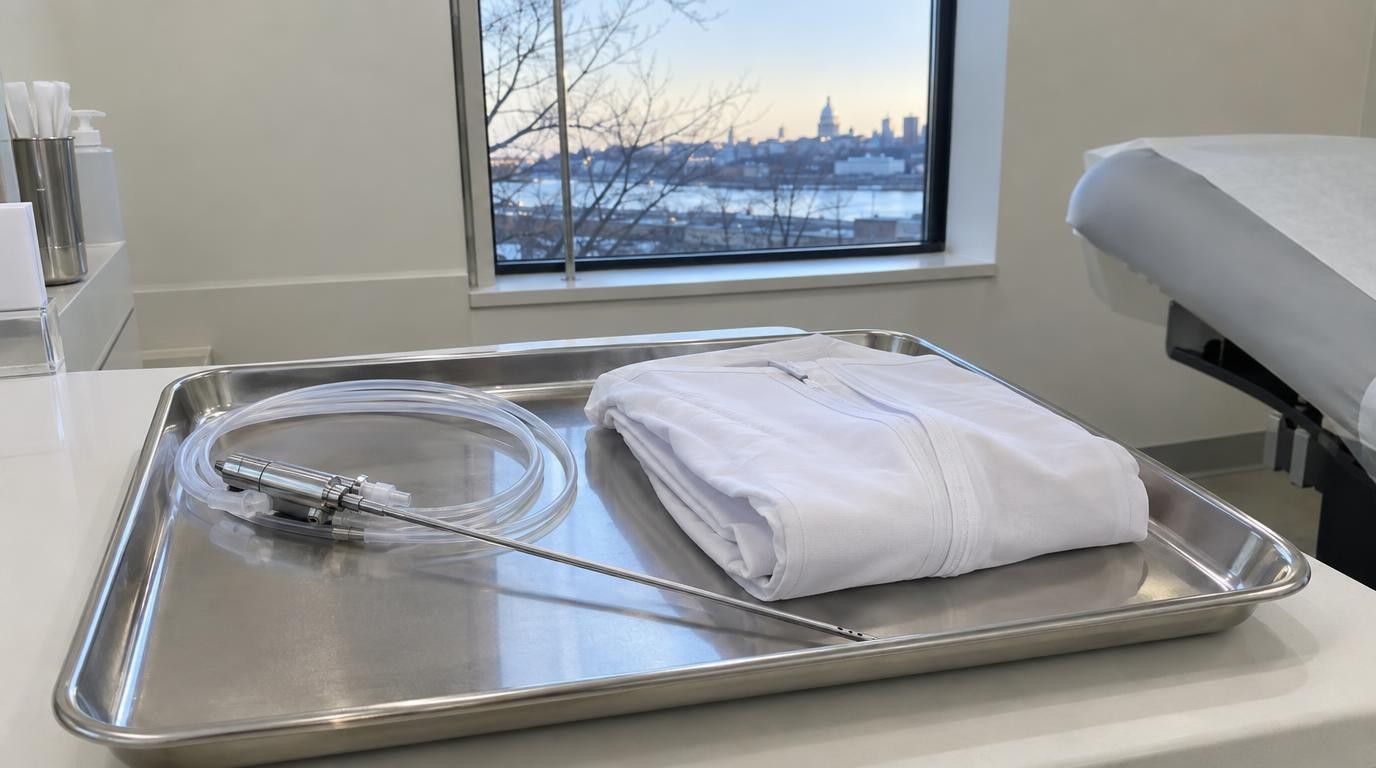
At Skinsational, the procedure usually takes 1–3 hours, and patients return home the same day with postoperative instructions. The planned incisions and tissue removal depend on what the examination finds; neither liposuction nor excision is guaranteed to be part of every patient’s procedure.
What are the risks of gynecomastia surgery, and who should wait?
Temporary swelling, bruising and discomfort are expected during healing, and incisions leave scars. Less common complications include significant bleeding, infection, lasting changes in nipple or chest sensation, asymmetry, contour irregularity and problems related to anesthesia or sedation. A person with an unresolved medical or hormonal cause, or a medicine that may contribute to enlargement, may need evaluation before elective treatment. Individual suitability is determined through a clinical assessment.
Which symptoms need prompt assessment before or after surgery?
Before cosmetic treatment, sudden swelling, severe pain or fever needs prompt medical assessment. After surgery, contact our surgical team promptly for rapidly increasing swelling, significant bleeding, fever, worsening redness around an incision or increasing pain. Seek emergency care for chest pain or shortness of breath. Discuss your medical history, medications and surgical risks with your licensed clinician before proceeding. Do not stop or change a prescription without advice from its prescriber.
How long does recovery take after male breast reduction?
Recovery varies with the procedure and the patient. At Skinsational, most patients resume light activities within a few days and normal routines within several weeks. A compression garment is worn for several weeks, while strenuous activity and heavy lifting are avoided early in healing. Swelling subsides gradually, so the chest contour changes over time.
Follow the incision-care and compression instructions provided after surgery, keep incisions clean and dry, stay hydrated, and use prescribed medication for discomfort as directed. Our male breast reduction recovery guide offers more detail on the healing process.
When can you resume light activity and exercise?
An article on the American Society of Plastic Surgeons website reports that return to work and exercise typically takes less than one week after liposuction alone, while tissue excision can take two to four weeks before routine activities are tolerable. Those are different activity benchmarks, not clearance for heavy lifting or strenuous chest exercise; follow your postoperative activity restrictions during healing.
What results can liposuction and excision achieve, and can gynecomastia return?
Liposuction and excision can reduce excess tissue and create a flatter chest contour. Results are generally long-lasting, although later weight changes can alter the chest contour; no particular appearance is guaranteed. The result depends on the tissue removed, skin quality and healing. Fat removal alone may leave glandular tissue or loose skin unchanged, and swelling can obscure the contour at first.
Will there be visible scars after male breast reduction?
Incisions leave scars, although they are placed discreetly around the areola or on the chest when appropriate. At Skinsational, scars usually fade significantly over time. Their eventual appearance varies with incision placement, the amount of tissue removed and individual healing; a plan involving skin removal may require different incisions from liposuction alone.
Can gynecomastia return after surgery?
Recurrence is rare but possible, particularly if a hormonal imbalance or contributing medication persists. Surgery removes the tissue targeted in the procedure; it does not necessarily resolve the condition that caused enlargement. That is why evaluating likely causes matters even when the immediate goal is a flatter contour.
Frequently Asked Questions
Can surgery address one breast if only one side is enlarged?
Yes, in some cases. A surgeon may plan treatment for one side or use different techniques on each side if both need reshaping. An examination of both breasts helps determine the approach and set realistic expectations about symmetry.
Will I need blood tests or imaging before gynecomastia surgery?
You may need tests if your history or examination suggests an underlying cause or raises concern about a breast lump. The clinical review identifies blood tests, imaging and tissue sampling as possible parts of gynecomastia evaluation. Blood tests can investigate hormonal or other medical causes; imaging or tissue sampling may help investigate a concerning lump.
Can teenagers have gynecomastia surgery?
Yes. Male breast reduction may be considered for a teenager with persistent gynecomastia after medical evaluation. Our team discusses the underlying cause, timing and the teen’s goals before deciding whether surgery is appropriate.
Which medications or health conditions can cause gynecomastia?
Anabolic steroids, anti-androgens, and certain heart or ulcer medicines can contribute to breast enlargement. Thyroid, liver, kidney or hormonal disorders may also be involved. Treating an underlying condition or safely changing a contributing medication may reduce enlargement before surgery is considered.
Can gynecomastia surgery make enlarged areolas smaller?
Yes, areola reduction can be included when enlarged areolas are part of the concern. The American Society of Plastic Surgeons states that excision is necessary if the areola will be reduced or the nipple repositioned. Liposuction alone removes fat, so it cannot directly reduce areola size. Excision incision patterns depend on the tissue that needs removal.
Where are the incisions for liposuction-based male breast reduction?
Liposuction incisions may be placed along part of the areola’s edge or in the armpit, depending on the surgical plan. The American Board of Cosmetic Surgery describes a small incision on each side of the chest. If glandular tissue or excess skin also needs excision, an incision around the areola or in a chest crease may be needed.
Does nicotine use affect healing after male breast reduction?
Nicotine can impair wound healing. Tell our team if you smoke, vape or use other nicotine products so we can discuss whether and when to stop before surgery and when it may be safe to resume. Do not change a prescribed nicotine product without guidance from its prescriber.
What happens at a gynecomastia consultation near Johnston?
Patients coming from Johnston, Rhode Island, can meet Dr. Luciano Sztulman at Skinsational Cosmetic Surgery Clinic in Providence, Rhode Island, for a private gynecomastia evaluation. The consultation covers likely causes, the amounts of fat, gland and loose skin, possible treatment techniques, recovery and realistic results. Liposuction alone is an option only when the findings support it.

If chest fullness has persisted and you would like to understand your options, contact Skinsational Cosmetic Surgery Clinic to schedule a consultation with Dr. Luciano Sztulman in Providence. A personalized examination is the way to decide whether liposuction, excision, a combined approach or no surgery is appropriate for you.
This information is general and is not medical advice. Talk to a licensed clinician about your own situation before making a treatment decision.

