

Last updated: October 9, 2026
A Brazilian butt lift (BBL) is surgery that removes fat by liposuction, prepares it for transfer, and places it in the buttocks to change their size and shape. At Skinsational in Providence, Rhode Island, we help patients understand who may qualify, the risks, and the restrictions during recovery.
What is BBL surgery, and does it actually lift the buttocks?
Despite its name, a BBL is not a traditional surgical lift. It can add volume and improve shape, but it does not remove loose or excess skin, as Cleveland Clinic’s Brazilian butt lift overview explains.
How does fat transfer change shape without implants?
Fat transfer uses your own tissue rather than a buttock implant. Liposuction can change the contours of donor areas, while strategic fat placement can improve buttock projection and roundness or, when appropriate, enhance the hip contour. The degree of change depends on your anatomy, the fat available for transfer, and how the transferred fat heals.
How does Skinsational perform a Brazilian butt lift?
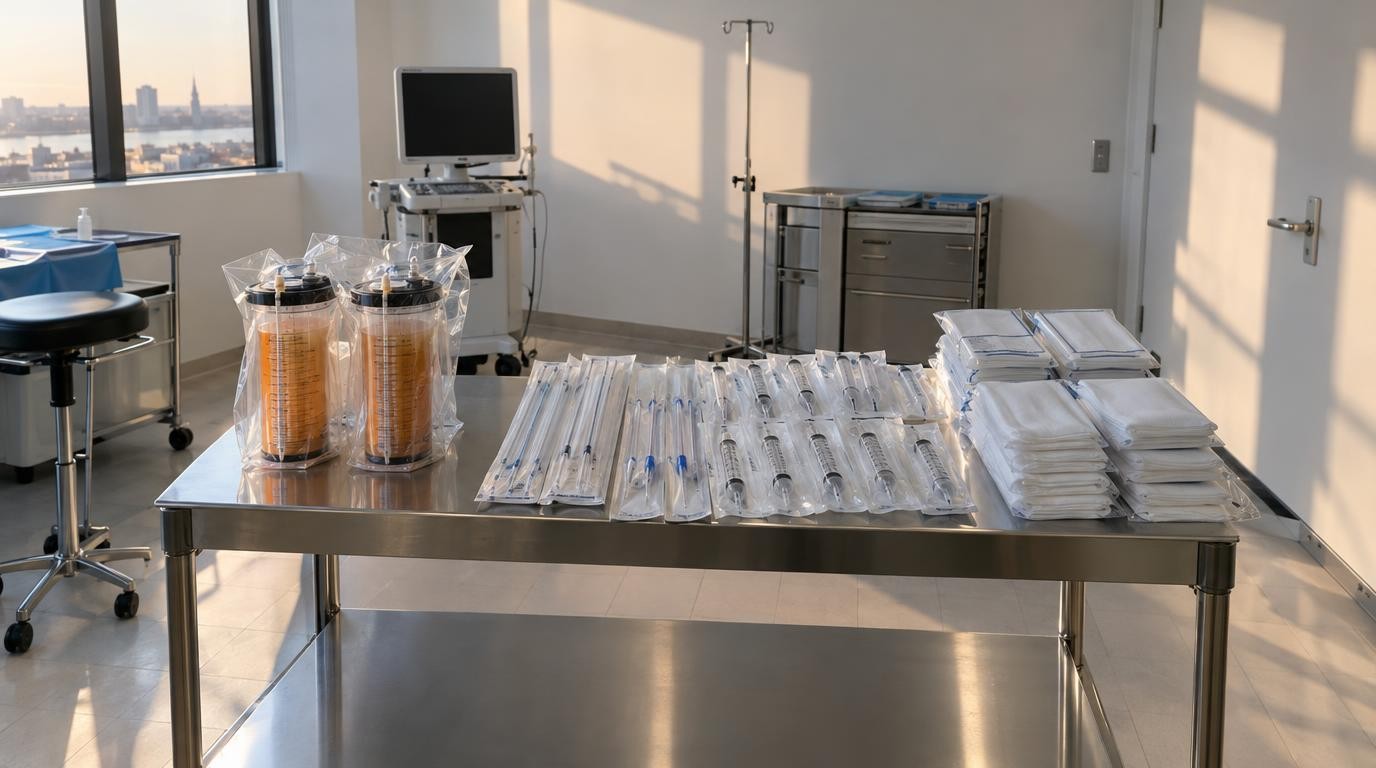
At Skinsational, Dr. Luciano Sztulman performs Brazilian butt lifts as outpatient procedures in three stages:
- Liposuction removes fat from suitable donor areas.
- The harvested fat is purified and prepared for transfer.
- Prepared fat is placed in selected areas of the buttocks to add volume and change their shape.
Where is fat removed before it is transferred?
Potential donor areas include the abdomen, flanks, hips, lower back, and thighs. The sites selected depend on where you have harvestable fat and how removing it would affect your proportions.
What type of anesthesia does Dr. Luciano use?
Dr. Luciano uses local anesthesia or intravenous (IV) sedation, not general anesthesia, for this procedure. Local anesthesia numbs the treated areas; IV sedation can make you drowsy while the care team monitors you.
Who may be a good candidate for BBL surgery?
Good skin tone, realistic expectations, and the ability to keep pressure off the buttocks during early healing are important. Men and women may be candidates, but physical and mental health matter too; appearance alone cannot establish whether surgery is suitable. Our guide to a Brazilian butt lift for men explains candidacy, recovery, and what to expect from results.
Do you need enough fat in other areas for a BBL?
Yes. Because the procedure uses your own fat, the surgeon needs to identify donor areas that can supply fat while allowing an appropriate contour at the removal sites. Having a particular goal for buttock size does not mean your body has enough suitable donor fat to achieve it.
Can men have a Brazilian butt lift?
Yes. At Skinsational, Dr. Luciano tailors fat placement to each patient’s anatomy and desired proportions; not every patient wants the same shape.
What are the risks of a Brazilian butt lift, and who should avoid it?
Swelling, bruising, and soreness are common after surgery. Possible complications include seroma (a fluid collection), fat necrosis, infection, hematoma or anemia, uneven contours, and blood clots in the legs (deep vein thrombosis) or lungs (pulmonary embolism). Pulmonary fat embolism is a separate, potentially life-threatening risk. A BBL may be unsuitable if a medical condition makes surgery unsafe or you cannot follow essential aftercare restrictions; discuss your individual risks with Dr. Luciano.
In a retrospective study of 7,000 consecutive BBLs using a standardized subcutaneous-only injection protocol, researchers reported seromas in 23%, anemia in 6.6%, fat necrosis in 1.9%, infection in 0.43%, hematomas in 0.14%, and no pulmonary fat embolisms, deep vein thromboses, or pulmonary embolisms. Those findings are not our clinic’s complication rates, do not prove embolic risk is zero, and cannot predict your individual risk.
An article on the American Society of Plastic Surgeons’ website explains that fat injected near large blood vessels can enter the bloodstream and block major vessels. Our Brazilian butt lift safety guidelines for patients cover questions to raise before surgery.
What safety questions should you ask a BBL surgeon?
Ask about the surgeon’s training and experience with gluteal fat transfer, whether fat will be placed only in the subcutaneous layer above the muscle, how that placement is verified, and how the team responds to a complication. Ultrasound-guided BBL safety is one approach to checking the injection plane; do not assume ultrasound will be used without confirming it.
After surgery, seek emergency medical care for sudden breathing difficulty, chest pain, fainting, or other severe symptoms. Seek prompt medical assessment for new swelling or pain in one leg, especially with warmth or redness, which may signal a blood clot. Contact our surgical care team promptly about worsening redness or drainage at an incision. For more about BBL scars, including where they appear and how they heal, see our guide.
Do BBLs have a smell?
Postoperative drainage that saturates a garment and difficulty with hygiene can contribute to odor; an article on the American Society of Plastic Surgeons’ website about postoperative odor also identifies bacterial overgrowth, infection, and fat necrosis as possible causes. A persistent foul smell is not expected. Contact our care team promptly if it develops rather than assuming a garment change rules out infection.
What is BBL recovery like, and is it painful?
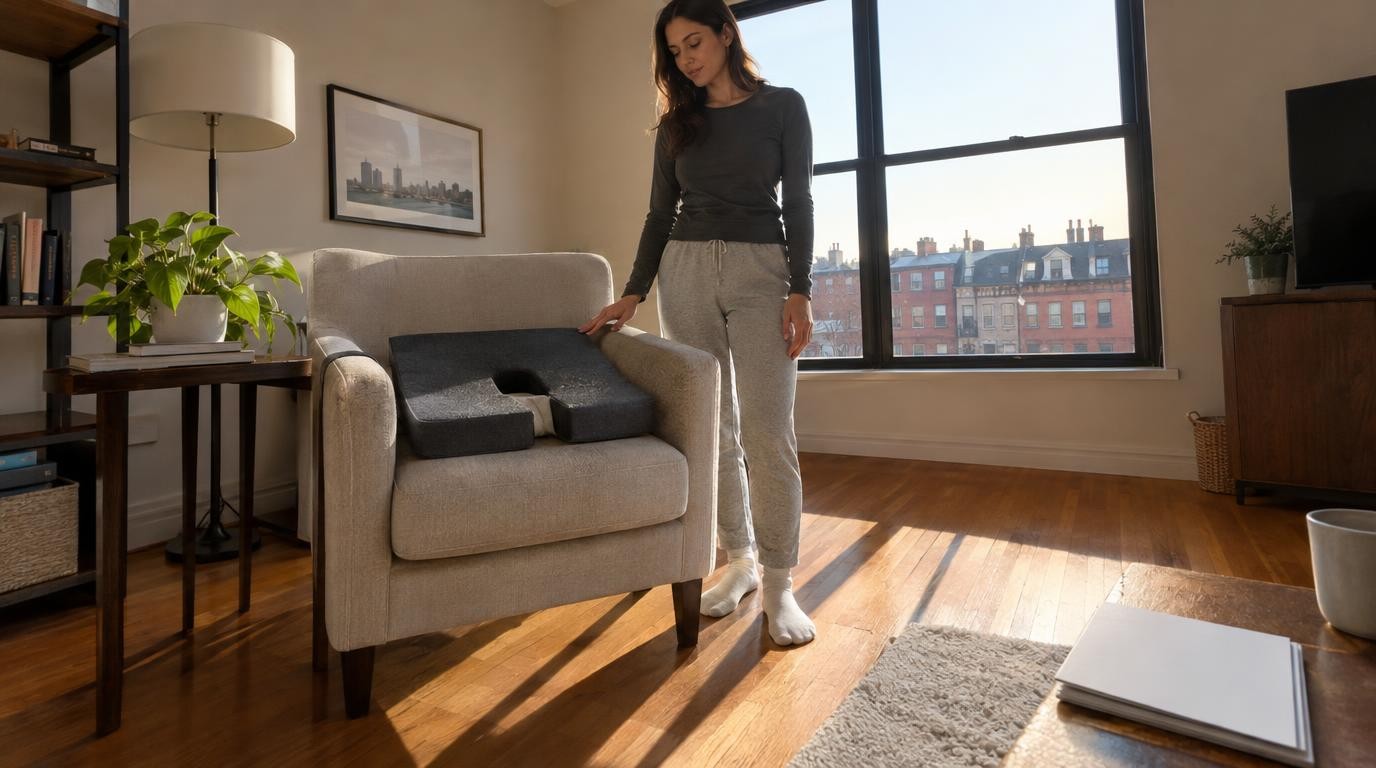
Expect early soreness at the liposuction sites and buttocks, along with a need to avoid sitting or lying directly on the buttocks while they heal. The first several days are often the most painful, although discomfort varies between patients and prescribed medication typically helps. Dr. Luciano will tell you when and how to resume sitting, work, and other activities based on your healing.
When should you call about pain during recovery?
Call our care team if pain worsens rather than improves, is difficult to manage with prescribed medication, or occurs with fever or other concerning symptoms. Do not assume worsening pain is part of a typical recovery.
When can you sit normally after a BBL?
Our typical sitting schedule is below; Dr. Luciano may adjust it based on your healing.
| Recovery period | Our guidance |
|---|---|
| First 2 weeks | Avoid sitting or lying directly on the buttocks except when using the toilet; stand or lie on your side or stomach for most activities. |
| Weeks 3–4 | Modified sitting may be permitted, with support under the thighs to keep pressure off the buttocks. |
| After 4 weeks | Normal sitting is often permitted, subject to Dr. Luciano’s instructions. |
When can you return to work and everyday activities?
Some patients return to light activities or work in about a week, depending on their job and healing. A desk job still requires a plan for avoiding direct buttock pressure, while physically demanding work may require more time away.
How long will a BBL last, and when will results settle?
BBL results are semi-permanent: surviving transferred fat can last several years and sometimes over a decade, although aging and weight changes may alter your shape. Maintaining a stable weight helps preserve the result. Final results are typically visible around 6 months, after swelling has subsided and the tissues have settled.
Why can the initial fullness change during healing?
Early swelling contributes to fullness, and not all transferred fat survives. Dr. Luciano may initially transfer a slightly greater volume to account for that expected loss. As swelling resolves and some fat is reabsorbed, the buttocks may look less full than they did immediately after surgery. Very rarely, reabsorption can leave contour irregularities that may require a touch-up procedure. Judge your shape after healing has progressed, rather than from its earliest postoperative appearance.
How does a BBL compare with implants or treatment for sagging skin?
A BBL, buttock implants, and a traditional buttock lift address different concerns:
| Option | What it uses | Main consideration |
|---|---|---|
| BBL | Your own transferred fat | Requires suitable donor fat and healing at both the liposuction and transfer sites. |
| Buttock implants | An implanted device | Does not require donor fat; carries implant-related risks. |
| Traditional buttock lift | Surgical removal of loose skin | Addresses sagging skin rather than adding fat volume. |
How is fat transfer different from buttock implants?
Liposuction changes donor-area contours while supplying fat for a BBL; an implant does not reshape those areas on its own. An implant may be an option when there is too little donor fat for the desired transfer, but it brings risks distinct from those of fat grafting.
What if loose skin is your main concern?
A traditional buttock lift removes excess skin but leaves a surgical scar. Liposuction may refine a fatty area, but liposuction alone does not remove loose skin. We also offer other body-contouring procedures; our guide to surgical and non-surgical body contouring covers the broader options.
What should you ask at a BBL consultation in Providence?
A BBL consultation at Skinsational in Providence, Rhode Island, should establish whether your anatomy and health support your goals and whether the recovery plan fits your life. Review donor fat, skin quality, desired proportions, anesthesia, surgical safety practices, pressure restrictions, and likely results. A personalized assessment matters more than assuming eligibility from photographs.
How will the surgeon assess your goals and donor fat?
Explain which areas you hope to reshape and what you consider a balanced result. Dr. Luciano can assess potential donor sites, skin tone, and the changes fat transfer could reasonably make. Preexisting asymmetry can affect where fat is placed and how symmetrical the result may be.
What recovery and safety plan should you review together?
Ask how to arrange sleeping, toileting, travel home, work, and modified sitting; confirm whom to contact about symptoms during recovery. Also review anesthesia, the planned fat-placement approach, and how the team handles complications. Clear answers help you decide whether the procedure and its aftercare are workable for you.
Frequently Asked Questions
How long does BBL surgery take?
A BBL typically takes 2 to 4 hours, according to the American Board of Cosmetic Surgery. Your time may differ depending on the liposuction areas and the fat-transfer plan.
Do I need someone to stay with me after a BBL?
Yes. Arrange for someone to drive you home and care for you for at least the first 24 hours, as Cleveland Clinic advises. You may feel dazed or sore after surgery, and avoiding pressure on your buttocks can make everyday tasks harder.
Do you have to wear a compression garment after a BBL?
You may need to wear a compression garment after a BBL because the procedure includes liposuction. An article on the American Society of Plastic Surgeons’ website about BBL recovery says garments are worn for at least one month. The fit and duration depend on your postoperative instructions.
When can I exercise after a BBL?
We generally allow activity to increase gradually after 4 weeks, following Dr. Luciano’s instructions. The American Board of Cosmetic Surgery says patients can generally resume normal activity around 8 weeks; the timing of strenuous workouts depends on healing.
Can you get a BBL if you’re skinny?
Possibly, if you have enough suitable fat to harvest. In the article on the American Society of Plastic Surgeons’ website about postoperative odor, a surgeon describes smaller-volume transfers for leaner patients that emphasize shape over a dramatic size increase. Without enough suitable donor fat, a BBL is not feasible.
What does ultrasound guidance do during a BBL?
Ultrasound can help the surgeon see tissue layers and check that fat is being placed in the subcutaneous layer rather than deeper tissue. A review of ultrasound-guided BBL describes this as a safety measure, not a guarantee against complications. Ultrasound is not necessarily used for every BBL.
Schedule a Brazilian butt lift consultation in Providence
Contact Skinsational Cosmetic Surgery Clinic in Providence, Rhode Island, to arrange a Brazilian butt lift consultation with Dr. Luciano Sztulman. Our team can discuss your goals, assess whether fat transfer is appropriate, and help you understand the safety and recovery plan before you decide.
This information is general and is not medical advice. Talk to a licensed clinician about your own situation before making a treatment decision.

