

Last updated: November 22, 2026
Labiaplasty for labial hypertrophy is surgery that reduces or reshapes enlarged inner labia when tissue causes persistent discomfort or when an adult wants a different appearance. Protruding or uneven labia do not, by themselves, mean something is wrong. The useful question is whether the tissue is causing symptoms and whether surgery fits your goals.
What Is Labiaplasty for Labial Hypertrophy?
Labiaplasty for labial hypertrophy reduces or reshapes enlarged labia minora, the inner folds of the vulva. The labia majora are the outer, hair-bearing folds. An American Society of Plastic Surgeons guide to labia majoraplasty describes removing tissue to reduce enlarged outer labia. At Skinsational Cosmetic Surgery Clinic, we assess whether inner-labia reduction, outer-labia reduction or outer-labia enhancement addresses your concern.
Does having large or uneven labia mean something is wrong?
No. Labia vary in size, shape, color and symmetry, and inner labia may extend beyond the outer labia. Our labiaplasty and labia reduction service addresses concerns that matter to the patient rather than applying a fixed measurement of what labia should look like.
When Might Enlarged Labia Make Someone a Candidate for Labiaplasty?
Enlarged labia may make someone a candidate for labiaplasty when the tissue repeatedly twists, tugs or rubs, or when its appearance causes a concern the patient wishes to address. Symptoms and personal goals matter more than a size cutoff.
Which symptoms should you bring to a labiaplasty consultation?
The timing and triggers of discomfort, including whether changing clothing or activities helps, can show how the tissue affects daily life. Concerns worth discussing include:
- Twisting, tugging or pinching of protruding labia
- Labial chafing, itching or soreness during exercise or cycling
- Friction from snug underwear, leggings or other clothing
- Discomfort during sex
The American Society of Plastic Surgeons’ labiaplasty guidance identifies twisting, tugging, itching, irritation and discomfort during cycling or intercourse among reasons patients seek surgery. Labial enlargement can be inherited or follow childbirth or aging; none of these establishes a need for surgery on its own.
Can you consider labiaplasty for appearance alone?
Yes. An adult may consider labia reduction surgery for a personally important appearance concern even without physical symptoms. That preference deserves a respectful discussion, not a claim that normal anatomy is abnormal. The decision should be your own, with realistic expectations about the size and shape surgery can achieve. A national evidence-based guideline for elective genital aesthetic labiaplasty recommends screening for body dysmorphic disorder and a preoperative psychological evaluation to assess body-image concerns and readiness before surgery.
How to Get Rid of Labial Hypertrophy?
Labiaplasty removes or reshapes enlarged labial tissue. If your main concern is chafing or tissue laxity rather than labial size, nonsurgical approaches address those concerns differently.
What can I do instead of labiaplasty?
Consider whether looser underwear or adjusting activities that repeatedly rub the area eases symptoms. These changes do not alter labial size, but they may make day-to-day discomfort manageable. For some tissue-tightening goals, radiofrequency treatment can tighten treated labial tissue without incisions, as described in an American Society of Plastic Surgeons article. It does not remove enlarged inner-labia tissue or provide the same reduction as surgery. If appearance is your only concern, doing nothing is also a valid choice. Our guide to deciding whether female genital surgery is right for you offers more questions to consider before treatment.
When is a medical evaluation important before considering surgery?
Persistent itching, soreness or pain deserves evaluation rather than an assumption that protruding tissue is the cause. An examination can assess where friction occurs and whether another source of irritation needs attention. This matters because removing tissue would not be expected to resolve symptoms unrelated to the labia.
How Is Labiaplasty for Labial Hypertrophy Performed at Skinsational?
At Skinsational, labia minora reduction is the usual surgical approach for enlarged inner labia. Dr. Luciano Sztulman evaluates the tissue and the patient’s goals, then plans a contour suited to that anatomy. The outpatient procedure is often completed in under two hours.
What happens during the outpatient procedure?
The surgical plan identifies the tissue to reduce or reshape while accounting for comfort, contour and sensation. Through planned incisions, Dr. Luciano removes excess labial tissue, shapes the remaining tissue and closes the incisions with sutures. We use local anesthesia with sedation or general anesthesia, depending on the procedure and the patient’s preference. Patients return home with an individualized recovery plan.
How does Dr. Luciano choose a surgical approach?
Dr. Luciano discusses trim and wedge techniques after examining the tissue and learning which changes matter to the patient. An article on the American Society of Plastic Surgeons’ site explains that trim labiaplasty removes the outer edge of the inner labia, often including its darker pigmentation, while wedge labiaplasty removes a V-shaped section and generally preserves the original edge. Trimming away the darker edge may suit some appearance goals, but without particular care, the trimmed edges can meet unevenly near the clitoral bulb; this is a potential concern, not an inevitable outcome. Our trim-versus-wedge guide explores that decision in more detail.
How Long Is Labiaplasty Swollen?
According to the American Society of Plastic Surgeons, the most noticeable swelling after labiaplasty is generally gone by six weeks, although residual swelling may take six months to disappear; healing varies. Bruising generally improves over the following weeks.
When can you return to work, exercise and sex?
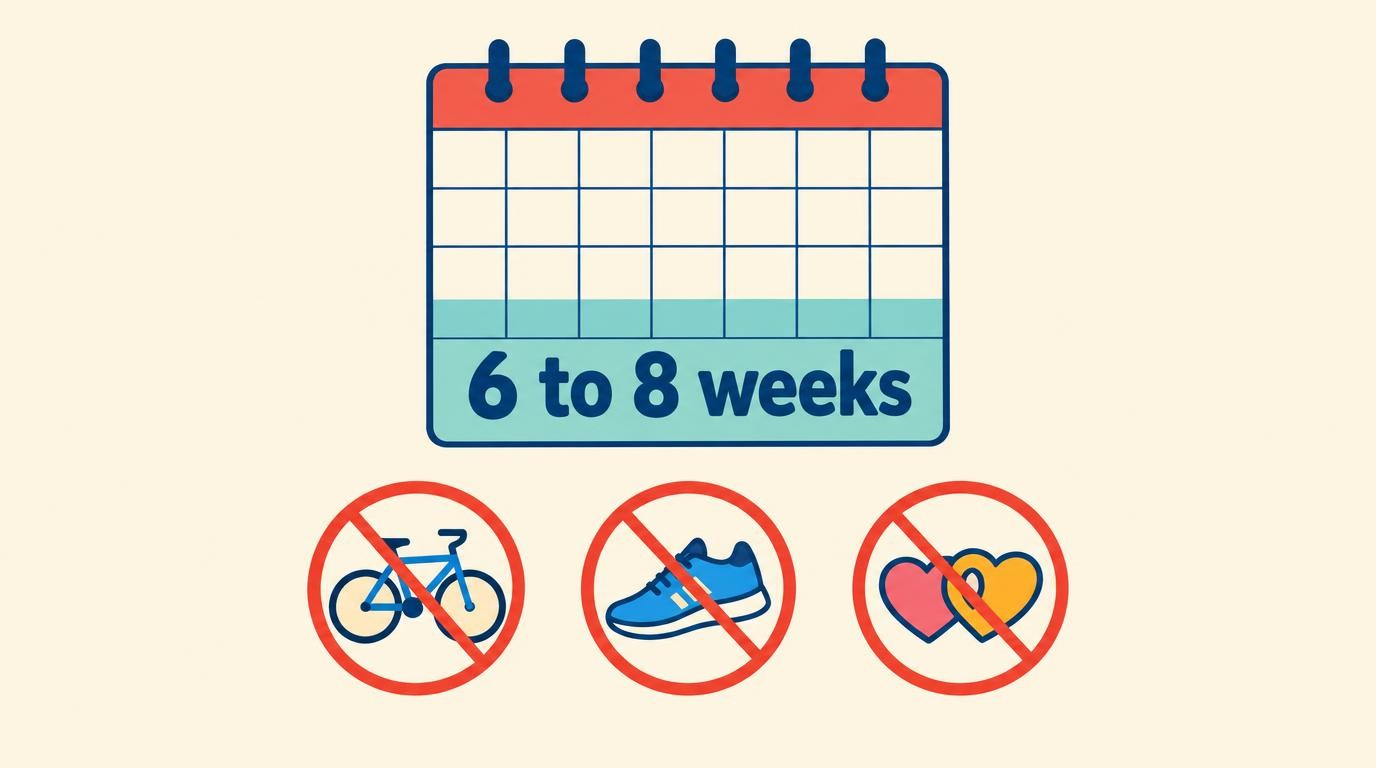
At Skinsational, most patients can return to light, non-strenuous work within 3 to 5 days, but we ask you to avoid strenuous exercise, cycling and sexual intercourse for 6 to 8 weeks:
| Activity | Skinsational’s guidance |
|---|---|
| Light, non-strenuous work | Most patients can return within 3 to 5 days. |
| Strenuous exercise and cycling | Avoid for 6 to 8 weeks. |
| Sexual intercourse | Avoid for 6 to 8 weeks. |
Visible improvement does not mean healing is complete. Follow your individual recovery instructions even as swelling subsides. Our labiaplasty recovery and results guide has more detail on what healing may look like.
What Results Can Patients Expect From Labia Reduction Surgery?
Labia reduction surgery aims to lessen friction caused by excess tissue and create a contour aligned with the patient’s goals. Relief, symmetry and a particular appearance cannot be guaranteed. Results also depend on whether the original discomfort came from labial tissue, so identifying the source of symptoms before surgery is important.
The American Society of Plastic Surgeons reports that patients whose labia twisted or tugged generally find relief after surgery and that multiple studies associate labiaplasty with satisfaction rates over 90 percent. Neither finding guarantees your result or symptom relief. Studies reviewed by the guideline cited above found improvements in genital self-image, although the evidence varies in quality and consistency. Our before-and-after photo gallery can help you consider possible contours, but another person’s result is not a promise of yours.
Can labiaplasty change sensation or leave scars?
Yes. Our surgical planning aims to preserve sensation and place incisions discreetly within natural folds, but sensation, healing and scar visibility vary. Altered sensation or a noticeable scar is possible. Our guide to labiaplasty scar visibility and healing explains that concern in greater detail.
What Are the Risks of Labiaplasty, and Who Should Avoid It?
Labiaplasty involves expected short-term swelling and bruising, as well as possible surgical complications. Bleeding, infection, healing problems, scarring, asymmetry, persistent discomfort and altered sensation should be part of informed consent. At Skinsational, candidates should be physically mature, in good overall health, have realistic expectations and not be pregnant or planning pregnancy soon.
What side effects and complications should you discuss with a surgeon?
The American Society of Plastic Surgeons identifies bleeding, a collection of blood beneath the tissue and infection as surgical risks. The Society’s labiaplasty page identifies over-resection as the most common complication: removing too much tissue can cause chronic dryness, scarring at or near the vaginal opening, or pain with intercourse. Healing problems are more likely with a wedge procedure, particularly after exposure to substances that constrict blood vessels. A clear discussion should cover the intended amount of reduction, the possibility that symptoms persist and what follow-up care involves. An educational overview of labiaplasty side effects may help you prepare questions.
Seek urgent medical care for heavy bleeding, fever, rapidly worsening pain or swelling, or spreading redness after surgery. Discuss your health, symptoms and individual risks with your own licensed clinician; an examination and informed consent determine whether labiaplasty is suitable for you.
Which Procedures Address Enlarged Inner or Outer Labia?
Labia minora reduction removes or reshapes enlarged inner-labia tissue. Labia majora reduction removes tissue from enlarged outer labia, whereas enhancement adds outer-labia volume rather than reducing it. At Skinsational, we offer outer-labia enhancement with fat grafting or fillers. Filler injections in the labia majora are off-label; risks include infection and lumps, while inadvertent injection into a blood vessel can cause tissue injury or other serious complications. Adding outer-labia volume does not remove inner tissue that twists, tugs or chafes.
Which option addresses inner-labia protrusion, enlarged outer labia or low outer-labia volume?
The distinction is anatomical:
| Concern | Approach | What the approach addresses |
|---|---|---|
| Inner labia that protrude or catch during activity | Labia minora reduction | Reduces or reshapes the tissue involved. |
| Enlarged outer labia | Labia majora reduction, or labia majoraplasty | Removes outer-labia tissue. |
| Concern about low outer-labia volume | Labia majora enhancement | Adds volume with fat grafting or fillers. |
Frequently Asked Questions
Does insurance cover labiaplasty for labial hypertrophy?
Labiaplasty for appearance alone is typically not covered by insurance. If labial tissue causes documented chronic pain, severe chafing or functional impairment, coverage may be worth investigating, but it is not guaranteed. We can explore your insurer’s documentation requirements for chronic symptoms.
When can I use tampons after labiaplasty?
You can generally resume using tampons after four to six weeks, according to the American Society of Plastic Surgeons. Follow your individual recovery plan if healing takes longer.
When does swelling peak after labiaplasty, and what can help?
Swelling generally peaks two to three days after labiaplasty, then gradually subsides over the following weeks, according to an article on the American Society of Plastic Surgeons’ site. A wrapped cold pack and resting with your bottom elevated may help, but follow your surgeon’s instructions for icing and activity. Seek medical care if swelling rapidly worsens.
Can labial tissue grow back after labiaplasty?
Removed labial tissue does not typically grow back, and results are usually long-lasting. An article by a surgeon on the American Society of Plastic Surgeons’ site describes recurrence as rare, although the remaining tissue can change with aging or pregnancy.
Can labiaplasty address one inner labium that is longer than the other?
It may be possible. When one inner labium is longer, a surgeon can plan a reduction on that side to improve balance. Perfect symmetry cannot be guaranteed.
Does labiaplasty tighten the vagina?
No. Labiaplasty reshapes external labial tissue; it does not tighten the vaginal canal. Vaginoplasty is a different procedure designed to tighten the vagina.
Is labiaplasty painful during or after the procedure?
You should not feel pain during labiaplasty because it is performed under anesthesia. At Skinsational Cosmetic Surgery Clinic, we use local anesthesia with sedation or general anesthesia according to the procedure and your preferences. Most of our patients report manageable discomfort during the first week with prescribed oral pain medication, ice packs and gentle care. Report worsening pain to your clinician.
How Can Cumberland Patients Discuss Labiaplasty in Providence?
Adults coming from Cumberland, Rhode Island, can discuss labiaplasty privately with Dr. Luciano Sztulman at Skinsational Cosmetic Surgery Clinic in Providence, Rhode Island. The conversation helps you decide whether surgery makes sense; attending does not commit you to a procedure.
What happens at a private labiaplasty consultation?
The consultation follows a practical sequence:
- Describe discomfort, clothing or activity triggers, and any appearance goals.
- Have the labial tissue examined to assess anatomy and possible sources of symptoms.
- Discuss suitable surgical approaches, anesthesia, expected outcomes and risks.
- Review a recovery plan and decide whether you want to proceed.
If you would like to explore labiaplasty, contact Skinsational Cosmetic Surgery Clinic to arrange a confidential consultation with Dr. Luciano Sztulman, MD, FACOG, FACS, in Providence. Call (401) 386-7252 to speak with our team.
This information is general and is not medical advice. Talk to a licensed clinician about your own situation before making a treatment decision.
About the doctor at Skinsational Cosmetic Surgery Clinic
Dr. Luciano Sztulman, MD, FACOG, FACS – Cosmetic surgeon with over thirty years of experience.

