

Last updated: November 23, 2026
A reverse tummy tuck, also called reverse abdominoplasty, addresses loose skin above the belly button. At Skinsational Cosmetic Surgery Clinic in Providence, Rhode Island, our tummy tuck and abdominoplasty services include procedures for different patterns of abdominal laxity.
What is a reverse tummy tuck, and how does it work?
A reverse tummy tuck is surgery for excess skin concentrated above the belly button. The surgeon lifts upper-abdominal skin toward an incision usually placed in the fold beneath the breasts, removes the excess, and closes the incision. A conventional tummy tuck generally draws abdominal skin downward toward an incision low on the abdomen.
Where is the incision for a reverse tummy tuck?
An American Society of Plastic Surgeons article on reverse tummy tucks describes the incision as lying along the lower breast fold, also called the inframammary fold. That position can help conceal the incision, but it does not make the resulting scar invisible. The exact placement depends on the surgical plan and the patient’s anatomy.
Is a reverse tummy tuck commonly a secondary procedure?
A surgeon quoted by the American Society of Plastic Surgeons says that, in his practice, a standalone reverse tummy tuck is fairly uncommon. He most commonly performs it as a secondary procedure when the lower abdomen has already been addressed but loose skin remains above the belly button.
Who qualifies for a reverse tummy tuck?
The clearest potential candidate has loose skin concentrated above the belly button without a need for extensive lower-abdominal correction. Stable weight and generally good health also matter. Fullness caused chiefly by fat or muscle separation is not the isolated upper-skin concern this operation targets.
Can it help after pregnancy or weight loss?
Pregnancy, weight loss, and aging can leave upper abdominal loose skin. The relevant question is where the excess skin remains now, not simply what caused it. A reverse approach may be worth discussing when the upper abdomen is the main concern and the lower abdomen needs little correction. A previous tummy tuck or liposuction can leave residual upper-abdominal laxity that a reverse approach may address; prior surgery also affects surgical planning.
When might another approach fit better?
If skin hangs below the belly button, laxity extends across the abdomen, or separated muscles contribute to a bulge, a reverse tummy tuck may leave the main concern untreated. The American Society of Plastic Surgeons’ tummy tuck candidate guidance emphasizes physical health, stable weight, and realistic expectations when considering abdominoplasty. Those considerations matter alongside the location of loose skin.
How does a reverse tummy tuck compare with a full or mini tummy tuck?
The location of loose skin, the need for muscle repair, and the resulting scar location help distinguish these approaches.
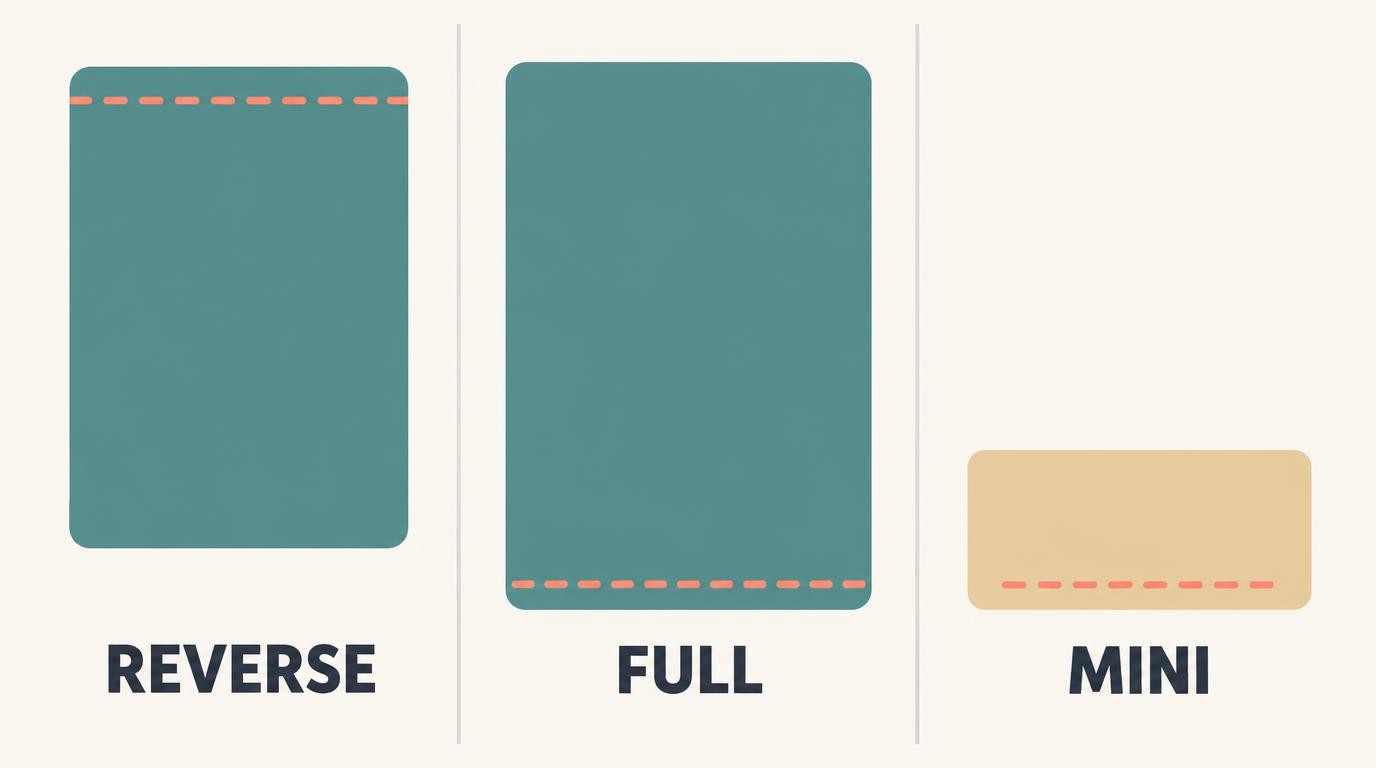
The treatment areas and incision trade-offs can be compared at a glance:
| Approach | Main concern | Typical incision area |
|---|---|---|
| Reverse tummy tuck | Loose upper-abdominal skin | Lower breast fold |
| Full tummy tuck | More extensive abdominal laxity, potentially with muscle separation | Low abdomen; belly-button work may also be needed |
| Mini tummy tuck | Mild skin or fat concerns below the belly button | Shorter low-abdominal incision |
What is the least invasive tummy tuck procedure?
An article on the American Society of Plastic Surgeons’ website comparing tummy tuck types calls a mini tummy tuck less invasive than standard and extended procedures. It uses a shorter incision and treats only the area below the belly button. “Mini” still means surgery and cannot correct loose skin above the navel.
Which approach addresses loose skin below the belly button or separated muscles?
At Skinsational, our full tummy tuck option is intended for significant skin laxity and abdominal muscle separation; the operative plan may include a low incision and belly-button repositioning. Our mini tummy tuck focuses on milder concerns below the belly button. When abdominal fat or waist contour is also relevant, we offer a tummy tuck with liposuction. Liposuction can refine fat contours, but it does not replace removal of excess skin. Our liposuction versus tummy tuck guide compares fat removal with skin removal, and the abdominoplasty without muscle repair guide discusses whether muscle tightening is needed.
What happens during a reverse tummy tuck consultation and surgery?
Before any incision, the surgical team selects and administers anesthesia appropriate to your health and surgical plan. The American Society of Plastic Surgeons’ tummy tuck procedure guide lists intravenous sedation and general anesthesia as options; the choice is individualized. After anesthesia, a reverse tummy tuck generally proceeds as follows:
- An incision is made along the fold beneath the breasts.
- Upper-abdominal skin is lifted upward, and excess skin is removed.
- The incision is closed, leaving a scar in the lower breast fold.
The precise incision placement and recovery plan depend on the operation and your anatomy.
How does a surgeon evaluate upper-abdominal skin and incision placement?
Dr. Luciano Sztulman, MD, FACOG, FACS, evaluates abdominal skin, fat, and muscle structure during Skinsational consultations. That assessment helps distinguish loose skin from fat or muscle-related bulging and guides discussion of technique, expected scarring, and recovery. If you have had abdominal surgery, the operative plan must also account for existing scars and adequate blood supply.
What should you confirm about the procedure a clinic provides?
We offer full and mini tummy tucks and tummy tucks combined with liposuction. Reverse abdominoplasty is a distinct technique, not another name for one of those procedures; its availability should not be assumed.
What is recovery like after a reverse tummy tuck?
Recovery after a reverse tummy tuck is generally more manageable than recovery after a full abdominoplasty, but it still requires careful planning and adequate rest. Your surgeon will tailor wound care, compression if prescribed, lifting restrictions, and follow-up to your operation.
How long might swelling and activity restrictions last?
For our general tummy tuck patients, the first 1–2 weeks commonly bring mild discomfort, swelling, and tightness; we use compression garments and limit bending, lifting, and strenuous activity. During weeks 3–6, strength and mobility typically improve, and light exercise may resume as instructed. The abdominal contour may become more defined in months 2–3, while healing and tightening can continue through months 3–6. These are not established recovery milestones for a reverse tummy tuck. Our tummy tuck recovery guide
Will the incision leave a scar?
Yes. A lower-breast-fold incision leaves a scar, even when clothing or the natural fold helps conceal it. Visibility varies with incision placement, healing, and individual anatomy. When comparing approaches, consider where you would prefer a scar as well as which part of the abdomen each operation can improve. Our guide to tummy tuck scar placement and healing addresses the low-abdominal incisions used in conventional approaches.
Do reverse tummy tucks work, and what results can you expect?
Removing excess upper-abdominal skin can provide a lasting improvement in contour above the belly button for a properly selected patient. At Skinsational, general tummy tuck improvements may last many years, but that is not a reverse-specific timeline or a guarantee. A reverse tummy tuck does not promise a flat abdomen or scar-free healing. Lower-abdominal laxity, abdominal fat, swelling, and individual anatomy affect how the abdomen looks after surgery; natural aging and significant weight changes can alter the contour over time.
Our before-and-after photo gallery shows examples of results, but another patient’s anatomy and procedure may differ from yours.
Can a reverse tummy tuck fix lower-belly skin or muscle separation?
Not as its primary purpose. Reverse surgery lifts upper-abdominal skin; it is not a general solution for a lower-belly overhang, abdominal fat, or diastasis recti. If those concerns are prominent, a full or mini approach may warrant discussion depending on where the skin excess and muscle changes occur.
What are the risks of a reverse tummy tuck, and who should avoid it?
A reverse tummy tuck carries surgical risks, including bleeding, infection, anesthesia complications, fluid collection, altered sensation, poor healing, and an unfavorable scar. Inadequate blood supply can contribute to skin necrosis (skin tissue death) and wound dehiscence (the incision reopening), making individualized planning important after prior abdominal surgery. A published case report of a conventional tummy tuck documents skin necrosis and wound separation, but one case cannot tell us how often either happens after a reverse procedure. Reliable reverse-specific complication rates have not been established by the available guidance. Your surgeon should assess your health and healing risks and discuss whether surgery, another approach, or postponement is appropriate.
Which surgical risks should you discuss before deciding?
Medications, prior abdominal operations, the anesthesia plan, and incision care can affect individual risks; the final contour or scar may also differ from what you hoped for. Seek urgent medical attention for severe chest pain, sudden shortness of breath, heavy bleeding, or other severe symptoms after surgery. Contact your surgical team promptly about fever, worsening redness, drainage, or increasing pain. Discuss your personal risks and warning signs with your own clinician before making a treatment decision.
When should you postpone an abdominoplasty consultation or procedure?
You can have a consultation even if you are not ready for surgery. The American Society of Plastic Surgeons’ tummy tuck information advises postponing surgery if you plan substantial weight loss or a future pregnancy, because these changes can diminish the result. Uncontrolled medical conditions or factors that impair healing may also require postponement.
Frequently Asked Questions
Will I need a surgical drain after a reverse tummy tuck?
That depends on your surgical plan. The American Society of Plastic Surgeons’ discussion of drainless tummy tucks explains that progressive tension sutures can reduce the space where fluid might collect and allow some tummy tucks to be performed without drains. That does not establish whether a reverse tummy tuck will need one; ask your surgeon how fluid will be managed during your operation.
Can I have a reverse tummy tuck if I have had a C-section?
Yes, a previous C-section does not automatically prevent a reverse tummy tuck. A surgeon quoted in the American Society of Plastic Surgeons article says a previous C-section does not affect candidacy, although planning must still account for adequate blood supply and healing.
Will a reverse tummy tuck remove stretch marks above my belly button?
It can remove stretch marks located on upper-abdominal skin that is excised, but it will not erase marks on skin that remains. The amount and position of skin removed determine which marks, if any, are affected.
Can exercise tighten loose upper-abdominal skin instead of a reverse tummy tuck?
An article on the American Society of Plastic Surgeons’ website explains that diet and exercise usually cannot tighten excess skin stretched by pregnancy or major weight loss. A bulge without excess skin may instead involve fat or changes in the abdominal wall.
Can liposuction alone fix loose skin above the belly button?
No. Liposuction removes fat but does not remove loose upper-abdominal skin. An article on the American Society of Plastic Surgeons’ website says liposuction alone is better suited to people with no or minimal skin laxity. When both fat and loose skin contribute, combining liposuction with skin-removal surgery may be an option.
Is a reverse tummy tuck a weight-loss procedure?
No. A reverse tummy tuck removes loose upper-abdominal skin; it is not intended to produce substantial weight loss. Candidates described in the American Society of Plastic Surgeons article are often fairly fit and at a stable weight. Significant weight changes afterward may alter the contour.
Do I need to quit smoking before considering a reverse tummy tuck?
You can consider the procedure, but smoking should be stopped before surgery because it impairs wound healing. The American Society of Plastic Surgeons lists being a nonsmoker among its general abdominoplasty candidate criteria. Nicotine use is relevant to healing even without cigarettes.
How can you choose the right tummy tuck approach in Providence?
For skin limited to the upper abdomen, weigh the breast-fold scar of a reverse tummy tuck against what that targeted operation can improve. Skin laxity across the abdomen or separated muscles may call for the broader reach of a full tummy tuck; laxity limited to below the belly button may suit a mini tummy tuck.
To discuss your options, contact Skinsational Cosmetic Surgery Clinic in Providence, Rhode Island, at (401) 386-7252 and request a consultation with Dr. Luciano Sztulman. If upper-abdominal skin is your main concern, you can also ask whether reverse abdominoplasty is available.
This information is general and is not medical advice. Talk to a licensed clinician about your own situation before making a treatment decision.
About the doctor at Skinsational Cosmetic Surgery Clinic
Dr. Luciano Sztulman, MD, FACOG, FACS – Cosmetic surgeon with over thirty years of experience.

