
Last updated: October 25, 2026
Does BBL stink? A healed Brazilian butt lift should not have a persistent, procedure-specific smell. Some people notice temporary odors while incisions heal and garments collect moisture, but not everyone does; a new or worsening foul smell deserves a call to the operating surgeon.
Does BBL stink after surgery?
In an article by Adrienne Santos-Longhurst on the American Society of Plastic Surgeons website, Dr. Keyes says odor is not a common or expected outcome when a BBL is performed under sterile conditions with proper postoperative care. At Skinsational, our Brazilian butt lift uses your own fat to add buttock volume without implants; the fat transfer itself does not produce an odor.
What causes a smell during BBL recovery?
A smell during BBL recovery may come from sweat and moisture trapped under a compression garment, fluid collected on a dressing, or difficulty cleaning comfortably while movement is restricted. Rarely, odor can be a sign of infection or fat necrosis. The smell alone cannot distinguish an ordinary hygiene issue from a complication.
In the article on the American Society of Plastic Surgeons website, Dr. Keyes explains that heat, moisture, and friction can encourage bacterial buildup on the skin, particularly when a garment stays damp. Postoperative fluid may also saturate a garment or dressing. When reporting an odor, say whether it seems to come from your skin, garment, or drainage.
Why does my bum smell even when I wash it?
Washing your skin may not remove an odor retained in a compression garment, pad, or dressing. Restricted movement can also make ordinary bathroom hygiene harder during Brazilian butt lift recovery. Follow your surgical team’s directions for cleaning and changing materials rather than repeatedly washing or scrubbing healing skin.
Does a bad smell mean transferred fat is dying?
No. A bad smell cannot diagnose fat necrosis or tell you how much transferred fat will survive. Some transferred fat normally does not survive and is reabsorbed during healing; that expected loss does not establish the cause of an odor. Fat necrosis is a complication that can cause odor along with increasing pain or a firm, tender lump. Report those changes to your operating team rather than assuming a smell measures fat survival. For a broader look at how contours change during healing, see our guide to before and after BBL results.
How long does a BBL stink for?
There is no normal number of days a BBL should smell; many patients never develop a noticeable odor. Odor associated with early drainage or a damp garment may improve when you follow your surgeon’s instructions for changing or cleaning materials. Contact your operating team if odor persists after cleaning or changing your garment or changing your dressing as directed, especially if it is foul or comes with other symptoms.
How can you manage BBL recovery odors without irritating your incisions?
Manage recovery odors by following your surgeon’s directions for incision cleaning, dressings, and garment changes. Keep healing areas as clean and dry as directed, and change damp materials on the schedule your team provides. Do not mask a concerning smell with perfume or try to remove persistent drainage through aggressive scrubbing.
Healing incisions can be irritated by friction or products your team has not approved. If moisture repeatedly soaks a dressing or garment, report the drainage rather than simply changing materials more often. The incisions from liposuction and fat injection need care; see our page on BBL incision locations and healing.
How should you care for a compression garment after a BBL?
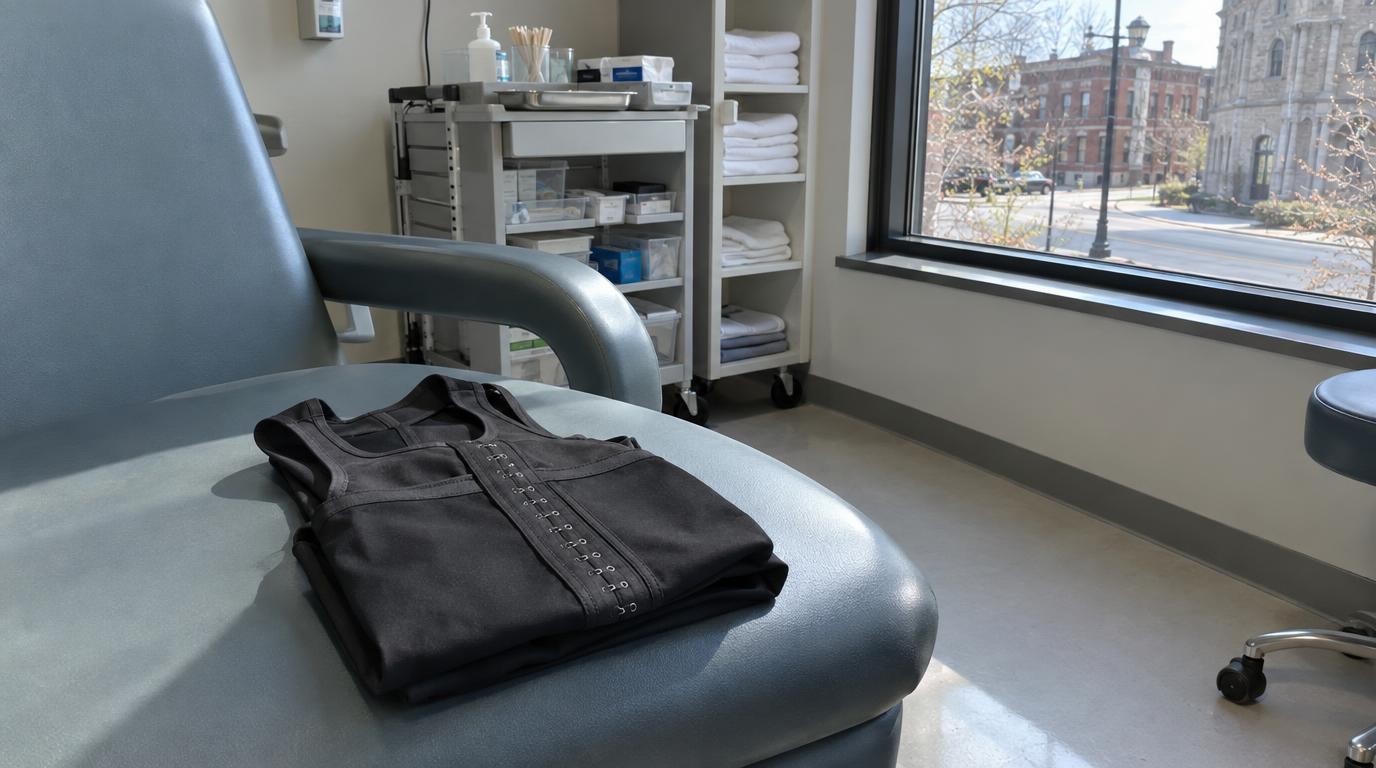
Use the garment, liners, and backup supplies your surgeon recommends. Dr. Keyes suggests changing and washing compression garments regularly, ideally every 24 hours. That is his general advice; follow your own team’s instructions about garment fit, removal, and dressings.
When should BBL odor prompt a call to your surgeon?
Call your operating surgeon promptly for a new or worsening foul odor, especially if you also have increasing redness, pain, fever, concerning drainage, or a firm, tender lump. A mild smell with an identifiable source may be less concerning, but odor alone cannot confirm or rule out infection, fat necrosis, or another complication.
Tell the team when the smell began, where it seems strongest, and what other changes you have noticed. Sudden chest pain, trouble breathing, or fainting calls for emergency care rather than waiting for a routine callback. If you are recovering away from the clinic, make sure the operating team knows how to reach you and where you can be assessed if needed.
How is a Brazilian butt lift performed at Skinsational?
At Skinsational in Providence, Rhode Island, Dr. Luciano Sztulman performs a BBL in three steps:
- He removes fat by liposuction from areas such as the abdomen, flanks, hips, or thighs.
- He processes the harvested fat for transfer.
- He injects the fat into the buttocks to add volume and shape.
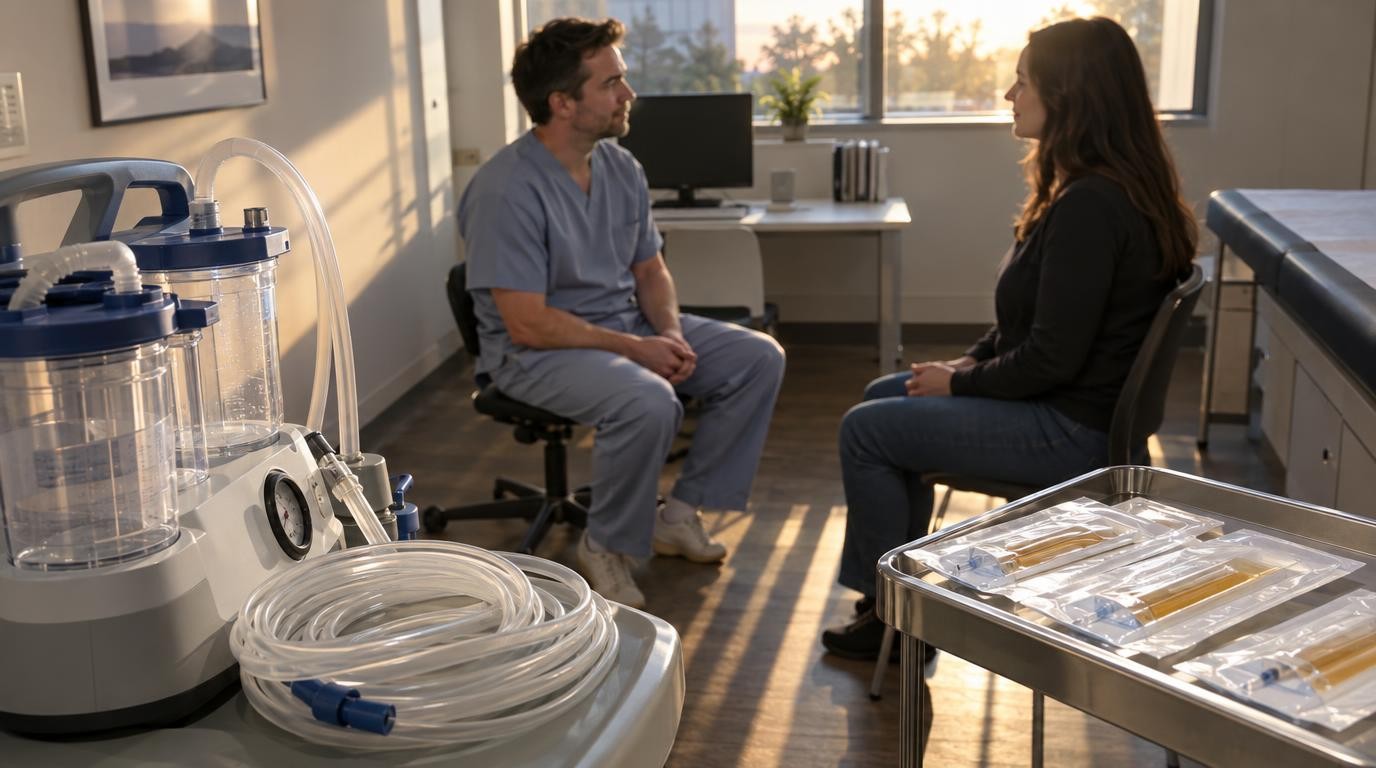
We typically perform BBL as outpatient surgery using local anesthesia or IV sedation. Dr. Luciano does not use general anesthesia for this procedure.
For safety, BBL fat should be placed only in the subcutaneous tissue beneath the skin, not in the underlying muscle. Deep or intramuscular placement has been associated with potentially fatal pulmonary fat embolism. The review Enhancing Safety and Outcomes in Brazilian Butt Lift: Mobile Ultrasound With Artificial Intelligence explains how ultrasound can help confirm the injection plane. Ask Dr. Luciano about his injection technique and the safety measures he uses, including whether he uses ultrasound.
The procedure combines contouring at the donor areas with added buttock volume. Because liposuction and fat transfer involve healing tissues and incision care, patients coming from Warwick, Rhode Island, should plan for both garment care and access to postoperative follow-up. Learn more about how BBL fat transfer and recovery work.
Can you sit to poop after BBL?
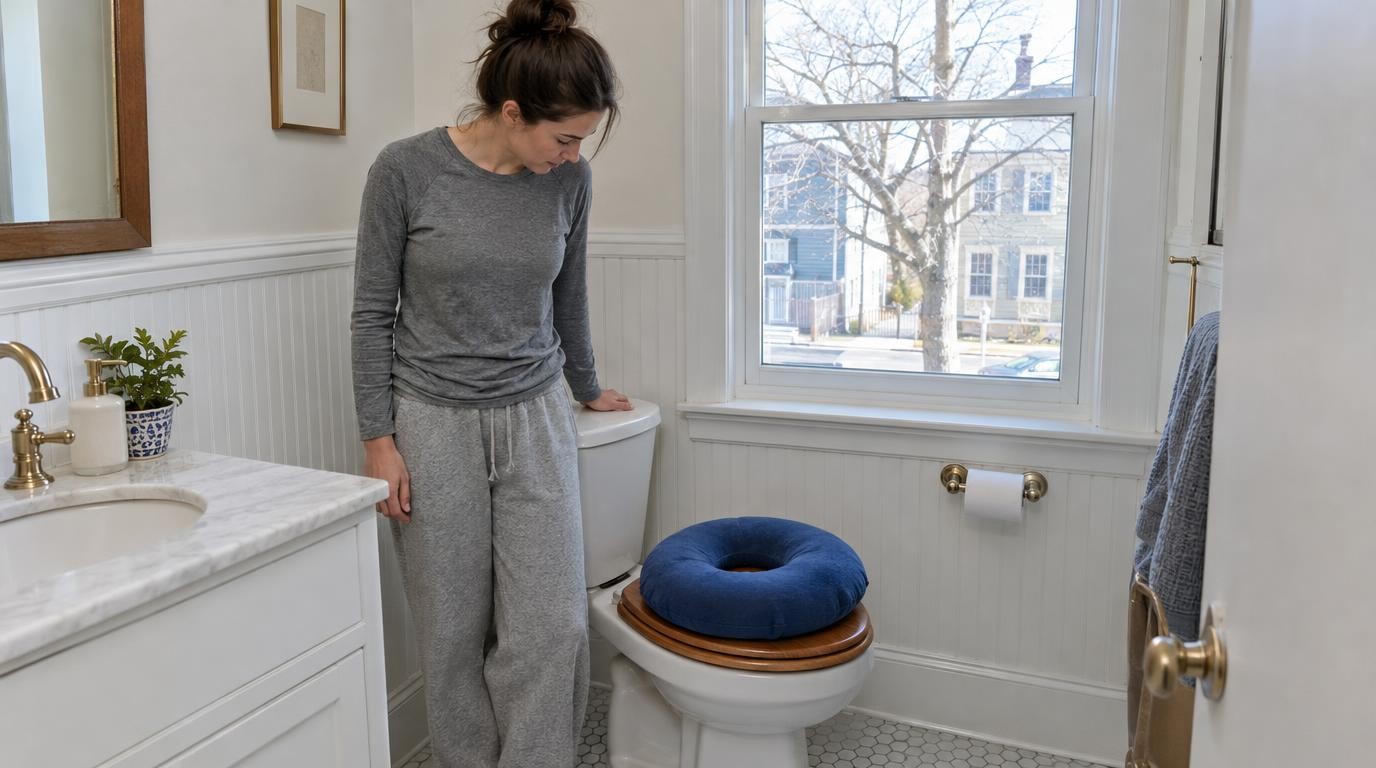
Yes. Skinsational’s initial restriction on sitting or lying directly on the buttocks makes an exception for toilet use. Bathroom access remains part of normal recovery hygiene. Outside that exception, follow Dr. Luciano’s pressure restrictions and plan how you will handle clothing and your compression garment without rushing or disturbing dressings.
When can you sit normally after a BBL?
Skinsational advises avoiding direct sitting or lying on the buttocks during the first two weeks, apart from toilet use. In weeks three to four, Dr. Luciano may allow modified sitting with a pillow under the thighs to limit buttock pressure. Normal sitting is often permitted after four weeks, subject to his instructions for your recovery.
What are the risks of a BBL, and who may not be a good candidate?
BBL risks include fluid collections called seromas, infection, fat necrosis, and potentially fatal pulmonary fat embolism; a smell cannot identify which complication, if any, has occurred. Candidates need sufficient donor fat, suitable skin tone, realistic expectations, and the ability to follow pressure restrictions. A BBL adds volume but does not remove loose skin. If loose skin is your main concern, ask a surgeon who performs conventional buttock lifts whether that procedure—which raises and smooths sagging skin—might be a better fit, as described in Cleveland Clinic’s Butt (Buttocks) Lift: What It Is, Surgery & Recovery.
For context, the retrospective study Brazilian Butt Lift: What We Learned Over 7000 Patients? reviewed 7,000 consecutive BBL procedures performed from 2018 through 2024. Its observed outcomes are shown below. The operations used a standardized subcutaneous-only injection protocol and other safety measures. These findings describe that series, not an individual patient’s risk or Skinsational’s results.
| Outcome | Finding in the reviewed series |
|---|---|
| Seroma | 23% |
| Anemia | 6.6% |
| Infection | 0.43% |
| Fat necrosis | 1.9% |
| Embolic events | None observed |
An article on the American Society of Plastic Surgeons website warns that improperly performed BBLs can have severe complications, including death. No series showing no embolic events can establish that the risk is zero. Swelling, bruising, and some drainage can occur during recovery. Discuss your personal risks and candidacy with your own clinician; our BBL safety guide can help you prepare questions.
Will a healed BBL smell years later?
A healed BBL is not expected to develop a procedure-specific smell years later. Healing-related moisture and drainage are separate from the long-term fat-transfer result. At Skinsational, final results are typically visible around six months; surviving transferred fat can remain for many years, although weight changes and fat reabsorption can alter the shape. For a closer look at skinny BBL before and after results, read about what changes to expect.
What happens 10 years after a BBL?
There is no guarantee that a BBL will look unchanged a decade later. The transferred fat that survives healing may persist, while changes in weight and natural fat reabsorption can affect contours. A new odor long after recovery should be assessed on its own merits, not assumed to be a delayed effect of the fat transfer.
How does a BBL compare with buttock implants if odor worries you?
Skinsational’s BBL adds volume with your own fat rather than placing buttock implants. The differences relevant to this decision are:
| Consideration | BBL fat transfer | Buttock implants |
|---|---|---|
| Source of added volume | Your own fat, removed by liposuction | A placed implant |
| Donor fat needed | Yes | No |
| Odor | Not an inherent effect of transferred fat; infection remains a risk | Not an inherent effect of the implant; infection remains a risk |
Frequently Asked Questions
Is blood-tinged drainage from BBL incisions normal?
Yes, some blood-tinged fluid can drain from BBL incision points during early recovery. An article on the American Society of Plastic Surgeons website says excess surgical fluid may drain from incision points and usually stops within a few days. Tell your operating surgeon if drainage develops a foul smell, increases unexpectedly, or comes with worsening pain or redness.
Can I use a bidet after a BBL if wiping is difficult?
Yes, a bidet may make bathroom hygiene easier when movement is limited after a BBL. Dr. Keyes suggests considering one if wiping after a bowel movement is difficult. Clean gently without disturbing incisions or dressings.
Can I use Hibiclens on my BBL incisions to get rid of a smell?
Use Hibiclens or another antiseptic on healing areas only as your surgical team directs. Dr. Keyes recommends gentle antiseptic cleansing as directed, but a cleanser cannot establish why an incision smells. Do not scrub healing skin or use a product to cover up a new or worsening foul odor; call your surgeon.
Is a skinny BBL less likely to cause recovery odor?
Possibly, but a smaller fat transfer does not guarantee an odor-free recovery. Dr. Keyes says smaller transfers may involve less postoperative fluid drainage and garment saturation. That is his clinical opinion, not a reliable way to predict your recovery or rule out infection if a foul smell develops.
Should I travel home right after a BBL if I notice a bad smell?
Contact your operating surgeon before leaving if you notice a new or worsening foul smell. An article on the American Society of Plastic Surgeons website advises patients traveling for BBL surgery to stay near the surgical team for at least four to five days, or as long as possible, for follow-up. The operating team can determine whether you need an examination before traveling.
What if I have a BBL odor and one swollen, painful leg?
Seek prompt medical assessment for swelling and pain in one leg after a BBL, whether or not you notice an odor. The article on the American Society of Plastic Surgeons website lists leg swelling, pain, tenderness, redness, or warmth as possible symptoms of deep vein thrombosis, a blood clot. A smell cannot tell you whether a clot is present. Chest pain, breathing trouble, or fainting requires emergency care.
What should you ask about BBL aftercare at your consultation?
- Which changes in drainage, odor, or skin appearance should I report?
- When and how should I change dressings and wash my compression garment?
- What is the best way to contact the team about a worsening symptom?
- How should I plan daily routines around my sitting restrictions?
If you are considering a BBL and traveling from Warwick, Rhode Island, contact Skinsational Cosmetic Surgery Clinic in Providence for a consultation with Dr. Luciano Sztulman. We can discuss whether fat transfer suits your goals and help you understand the recovery plan before you decide.
This information is general and is not medical advice. Talk to a licensed clinician about your own situation before making a treatment decision.

